At ten o'clock on a weeknight in Seoul, the office towers are still lit, the barbecue restaurants are on their second round of pork belly, and a table of coworkers is just getting started. Green soju bottles stand between the side dishes, someone is pouring for the boss with both hands, and the plan for later already includes a karaoke room. Korean nightlife does not really start at a club door. It starts at a dinner table and moves from there.
That makes South Korea one of the easiest countries in Asia to go out in, even if you never set foot in a club. The streets are well lit, the food keeps coming, and the subway runs late. It also has its own rules, from who pours the drinks to how you get home after the last train. Below we go through Seoul district by district, then Busan, and then the quieter cities where an evening means a lit palace pond or a kettle of rice wine.
How does a night out in Korea work?
Locals often describe a night out in rounds, or cha. The first round (il-cha) is dinner with drinks: Korean barbecue, fried chicken with beer (known as chimaek), or a stew to share. The second round (i-cha) moves to a pub, a tent bar or a beer hall. The third might be a noraebang, a private karaoke room, and for some groups a fourth is a late bowl of hangover soup. Nobody expects you to do all of them, but it explains why the streets get busier after 10 p.m., not quieter.
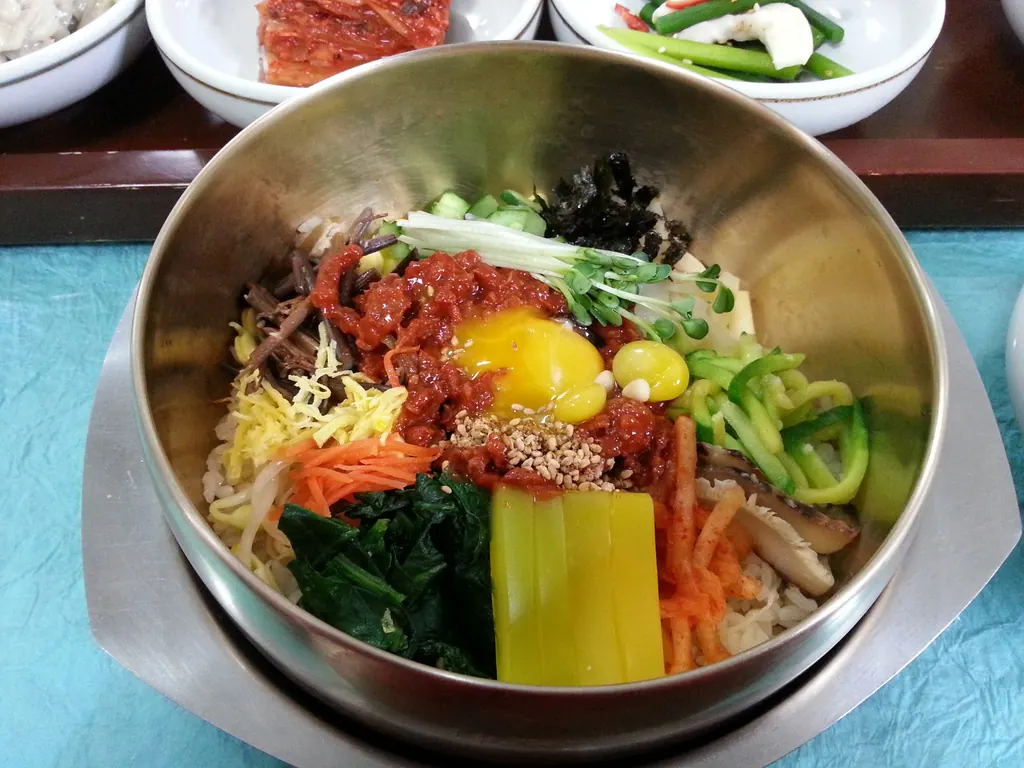
Food is part of almost every drink. Bars and pubs usually expect you to order anju, dishes meant to go with alcohol, such as fried chicken, seafood pancakes, spicy stir-fried squid or dried fish. In many places drinking without ordering food looks odd.
There is no national closing time, so in the big districts many bars run until 2-5 a.m. and some convenience stores, restaurants and karaoke rooms never close at all. Convenience stores also double as cheap outdoor bars: plastic tables, instant noodles and a bottle of soju at store prices.
Soju, makgeolli and the drinking etiquette that matters
Soju is the national drink, a clear spirit usually around 16-17 percent alcohol, sold in small green bottles and drunk in shot glasses. It is cheap in a store, around 1,800-2,000 won (about $1.40) a bottle, while restaurants in Seoul commonly charged 5,000-6,000 won (about $4) in 2025, according to The Korea Times, and more in Gangnam. Mixing it into beer creates somaek, a party staple.
Makgeolli is a milky, lightly fizzy rice wine, usually 6-8 percent, served in a kettle or bottle and poured into shallow bowls. It is the classic match for savory pancakes, especially on rainy days, and it has had a revival in modern bars that pour small-batch versions.
A few habits are worth knowing before the first glass:
- Do not pour your own drink. Pour for others and let them pour for you. Keep an eye on empty glasses around the table.
- Use two hands with elders. When someone older pours for you, hold your glass with two hands (or one hand supporting the other wrist). Do the same when you pour for them.
- Turn away to drink. With someone clearly older or senior at the table, younger people often turn their head slightly to the side while drinking. Visitors are not expected to get it perfect, but the gesture is noticed.
- Refusing is fine. Leave your glass full if you want to slow down. An empty glass gets refilled.
The legal drinking age is 19, counted by calendar year: you can drink from January 1 of the year you turn 19. Clubs and bars in the main districts check ID, and foreigners should carry a passport.
Seoul by district: where should you go out?
Seoul's nightlife is spread over several districts with very different moods. They are all on the subway, so it is easy to start in one and finish in another.
| District | The mood | Good for |
|---|---|---|
| Hongdae | Student area, live music, clubs, street performers | Cheap drinks, dancing, a young crowd |
| Itaewon | International bars and food, rooftop terraces | Mixed crowds, LGBTQ bars, English spoken |
| Gangnam | Large clubs, polished lounges, dress codes | Big DJ nights, a more expensive evening |
| Euljiro | Old printing alleys with hidden bars | Beer and dried fish, small cocktail bars |
| Seongsu | Converted factories, design shops, wine bars | A calmer, stylish evening |
| Jongno | Tent bars, old pubs, office workers | Pojangmacha and classic Korean drinking |
Hongdae
The area around Hongik University is the loudest and youngest part of the city at night. Buskers and dance crews perform on the streets in the evening, small venues host indie bands, and clubs fill up from around midnight on weekends. Drinks are cheaper than in Gangnam, and nearby Yeonnam-dong and Sangsu-dong have quieter bars if you want to talk.
Itaewon
Itaewon has long been Seoul's most international district, with bars from every corner of the world, craft beer, rooftop terraces and some of the city's best-known LGBTQ bars. The surrounding neighborhoods of Gyeongnidan-gil and Haebangchon are a little calmer, with small pubs on steep streets. Itaewon also carries the memory of the October 2022 crowd crush (more on that below), and the district has worked hard since then to bring visitors back.
Gangnam
South of the Han River, Gangnam is where the big clubs and polished lounges are, especially around Gangnam Station, Sinsa and Apgujeong. Expect entry fees, dress codes and higher prices. It is the place for a big DJ night rather than a cheap round.
Euljiro and Seongsu
These are the two districts where Seoul's newer bar scene has grown up. Euljiro, nicknamed "Hipjiro," is an old area of printing shops and metal workshops, and many of its bars hide up narrow stairs with no sign at street level. Its best-known evening spot is Nogari Alley, where plastic tables spill onto the street and people drink draft beer with grilled dried pollock. Seongsu, on the east side, has turned old factories and warehouses into cafes, wine bars and shops, and draws a slightly older, design-minded crowd.
Pojangmacha and the Han River
The pojangmacha is the orange or blue tent bar, lit by bare bulbs, where you sit on plastic stools and order soju with spicy stir-fried dishes, grilled fish or noodles. The best-known cluster in Seoul is around Jongno 3-ga, and you will find tents near markets in most cities. Dishes are meant for sharing and often cost 15,000-25,000 won (about $11-19), so they work best with a few people.
On warm evenings, the Han River parks are an alternative to any bar. Groups spread mats on the grass, order fried chicken and beer, and watch the bridges light up.
Noraebang: Korea's karaoke rooms
A noraebang is a private room rented by the hour, with a screen, a thick songbook or tablet, tambourines and a sound system. Prices vary by room size and time of night, but hourly rates around 20,000-30,000 won (about $15-22) for a room are common, with higher prices late on weekends. Coin noraebang, small booths for one or two people, charge per song, often around 500 won (about 40 cents). Most rooms have a good selection of English songs, and many stay open until dawn.
Busan: Seomyeon, Gwangalli and the bridge
Korea's second city has a nightlife built around the sea. Seomyeon is the downtown hub, where two subway lines meet and the side streets are packed with barbecue restaurants, pubs, clubs and noraebang.
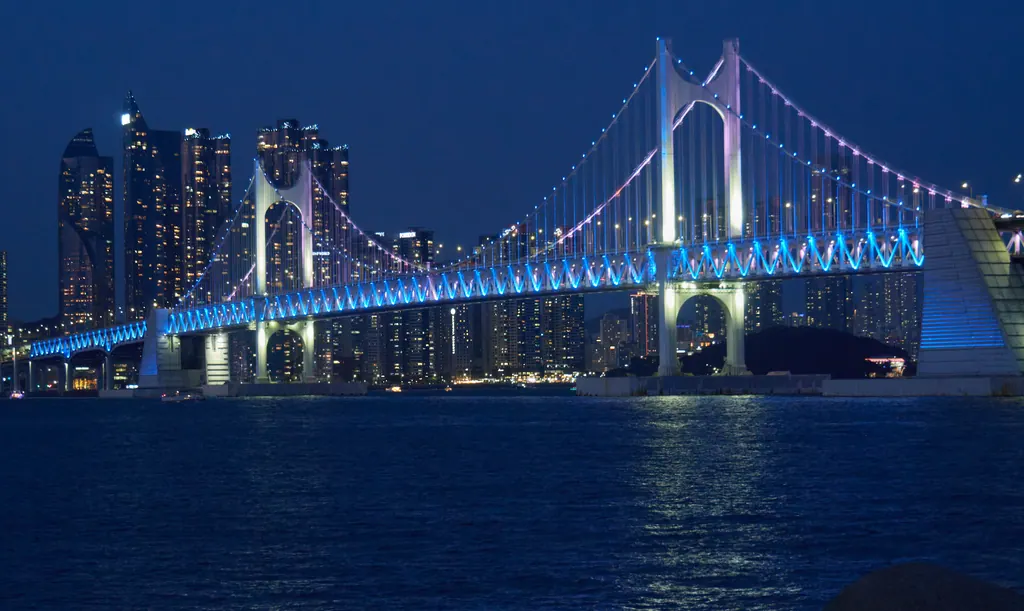
Gwangalli is the beach with the view. The Gwangan Bridge crosses the bay in front of it and is lit up in changing colors every night, and the beachfront road is lined with bars, cafes and raw fish restaurants with terraces facing the water. On Saturdays, the Gwangalli M Drone Light Show sends hundreds of drones over the beach; in 2026 it ran at 7 p.m. and 9 p.m. from October to February and at 8 p.m. and 10 p.m. from March to September, weather permitting. The Busan Fireworks Festival over the same bay draws enormous crowds each November, and was set for November 7, 2026.
Haeundae, the city's biggest beach, has a more resort-style evening scene with hotel bars, while the pojangmacha tents in Busan tend to focus on seafood. The local soju brands in the region are C1 and Daesun, and ordering one is a small way to show you know where you are.
Gyeongju, Jeonju and Gangneung: quieter nights
Outside the two big cities, an evening is less about clubs and more about walking, eating and one long drink.
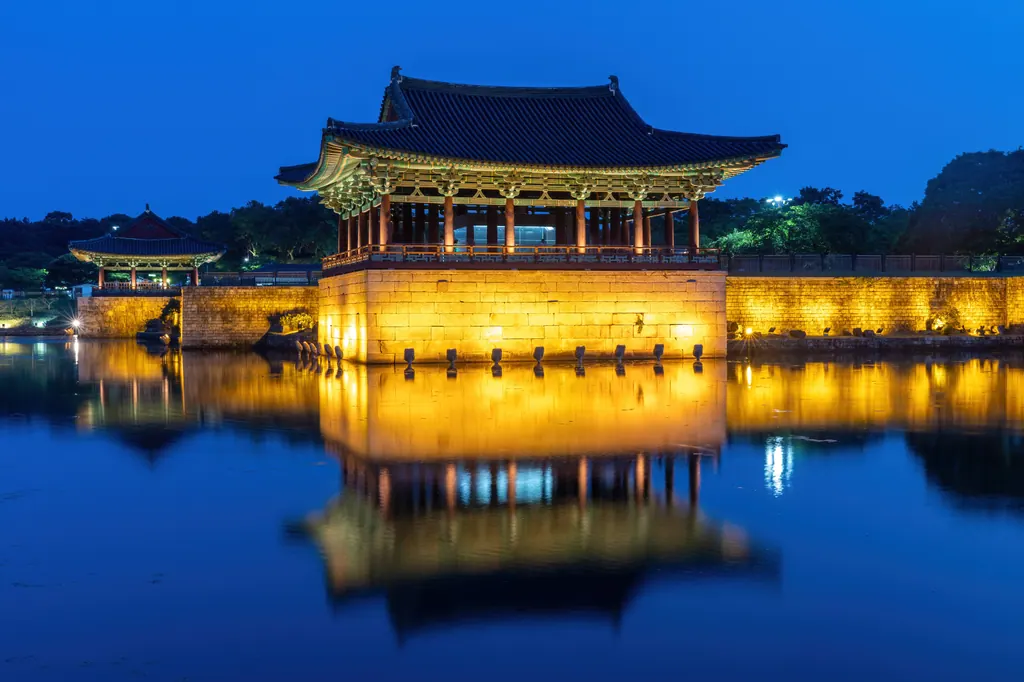
Gyeongju, the old capital of the Silla kingdom, is at its best after dark. Donggung Palace and Wolji Pond are lit up at night, and the pavilions reflect in the still water. The site was open until 10 p.m. in 2026, with last entry around 9:30 p.m. and adult admission of about 3,000 won (about $2). Arriving just after sunset gives you the blue sky and the lights at the same time. Nearby, the Cheomseongdae observatory and the Woljeonggyo bridge are also illuminated, and the hanok streets of Hwangnidan-gil fill up with people moving between cafes, small bars and bakeries.
Jeonju is the makgeolli city. In the makgeolli alleys of Samcheon-dong and Seosin-dong, you order a kettle and the kitchen sends out a spread of side dishes, and each new kettle brings another round of food. A basic set for two was around 25,000-35,000 won (about $19-26) in 2026. Jeonju is also known for gamaek, short for corner store beer: small shops that serve cold beer with grilled dried fish at tables outside. After dinner, the lanes of Jeonju Hanok Village are pleasant for a late walk.
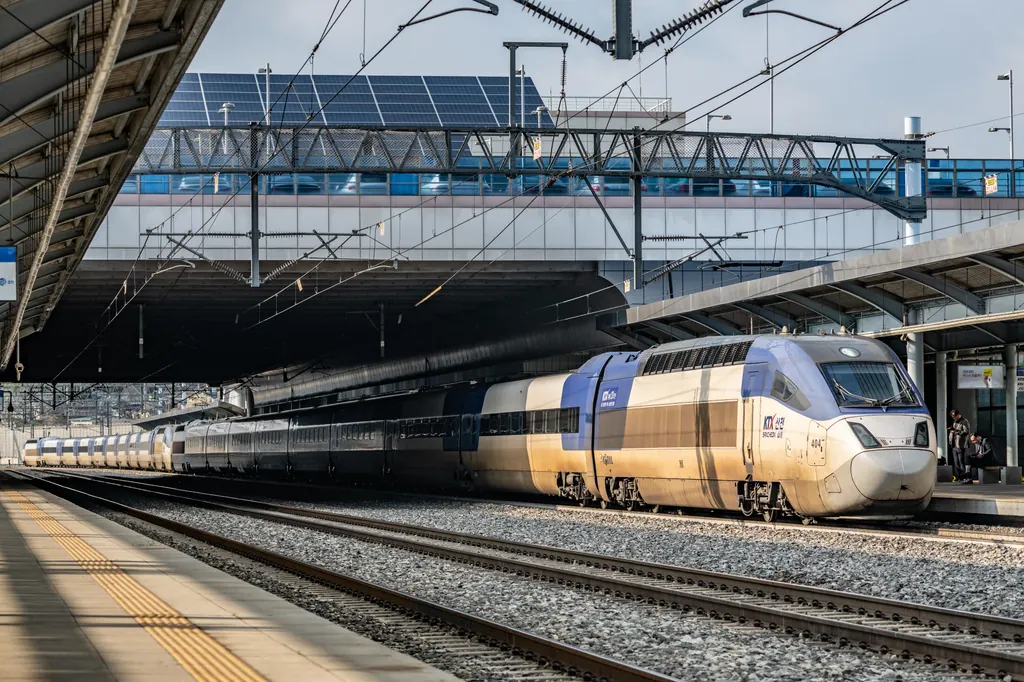
Gangneung on the east coast is a seaside town where evenings are slow. Couples walk the lit paths around Gyeongpo Lake, Gyeongpo Beach has a handful of bars and fried chicken spots facing the sea, and Anmok Beach is lined with coffee shops that stay busy into the evening. It is a good place to recover after a few nights in Seoul, and the KTX gets you there from the capital in about two hours.
Is it safe to go out in South Korea?
For most travelers, yes. The UK Foreign Office notes that crime against foreigners is uncommon, though it advises extra care around bars and nightlife areas at night, where thefts and assaults, including sexual assault, have been reported. It also warns that Korean drug laws are strict, with long prison sentences even for small amounts of cannabis, and that people have been detained on the basis of drug tests alone. We checked the advice on October 29, 2026; check the current version before you go.
The bigger issue in recent years has been crowds. On October 29, 2022, 159 people died in a crowd crush in a narrow alley in Itaewon during Halloween celebrations. Since then, Korean authorities have treated crowd safety seriously. Ahead of Halloween 2026, Seoul police named 14 locations where large crowds were expected and deployed more than 4,500 officers to districts including Itaewon, Hongdae, Seongsu and Myeong-dong, with traffic restrictions in the busiest streets. On big nights, avoid getting stuck in a narrow, packed alley, follow police directions, and leave early if a street feels too full.
How do you get home after a night out?
Plan your route home before the last round. Subways in Seoul generally run until around midnight to 1 a.m., depending on the line and direction, and Busan's metro stops around the same time. After that, Seoul has a network of night buses whose route numbers start with N, which you can find in Naver Map or KakaoMap.
Taxis are plentiful but hard to catch in the busiest districts around 1-2 a.m. The base fare for a regular Seoul taxi has been around 4,800 won (about $3.50), and a late-night surcharge of about 20-40 percent applies from 10 p.m., highest in the middle of the night. Taxi apps such as Kakao T make it much easier, and drivers often speak little English, so having your hotel's address in Korean saves time.
A few final tips:
- Eat while you drink. Soju is easy to underestimate, and anju is part of the culture anyway.
- Pace the rounds. Start late, take a karaoke break, and do not try to keep up with a Korean office dinner.
- Carry your passport for club entry, and a card plus some cash for tent bars.
- Pick your city by mood. Seoul and Busan for late nights, Gyeongju and Jeonju for an evening that ends by midnight.
For more on the country, see our South Korea destination page and our food and drink stories. If you are comparing nights out across Asia, our guide to nightlife in the Philippines shows a very different karaoke culture, and food in Taiwan covers another great night market country.
Frequently asked questions
What is the legal drinking age in South Korea?
The legal drinking age is 19, counted by calendar year, so you can drink from January 1 of the year you turn 19. Clubs and bars in busy districts check ID, and foreigners usually need a passport.
What time do bars close in Seoul?
There is no national closing time. In districts like Hongdae, Itaewon and Gangnam, many bars and clubs stay open until 2-5 a.m. on weekends, and some restaurants, karaoke rooms and convenience stores are open 24 hours.
Can you drink in public in South Korea?
Drinking outdoors is common, from convenience store tables to picnics in the Han River parks. Local rules can restrict it at specific places or events, so follow posted signs.
How much does a bottle of soju cost in Korea?
A bottle costs around 1,800-2,000 won (about $1.40) in a convenience store and commonly 5,000-6,000 won (about $4) in a Seoul restaurant, with higher prices in Gangnam.
Is Itaewon safe to visit now?
Yes, Itaewon is open and busy again, and police now manage crowds on big nights such as Halloween. Avoid packed narrow alleys at peak times and follow police directions.
- South Korea travel advice: safety and security, GOV.UK
- Restaurants slash soju, beer prices despite high inflation, The Korea Times
- Safety management reinforced at 14 locations including Itaewon, Hongdae and Seongsu, Herald Corporation
- Safety measures take priority 1 year after Itaewon crowd crush, The Korea Times
- Gwangalli M Drone Light Show, official site