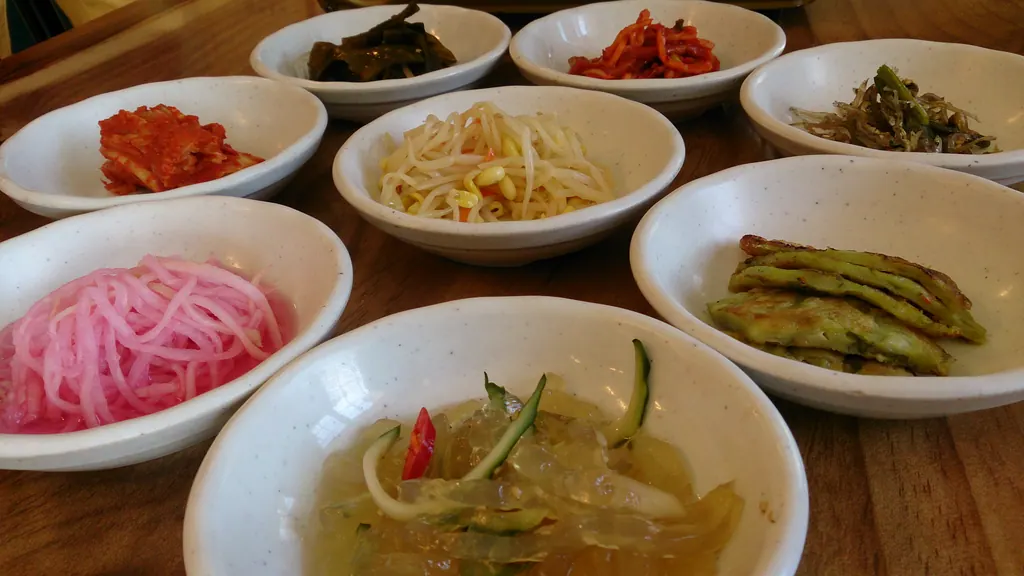
The first thing to arrive is not your food. Before anyone takes your order at a Korean restaurant, the table fills with small dishes: cabbage kimchi, seasoned spinach, soy-braised potatoes, maybe a few slices of fish cake or a spoonful of bean sprouts. Nobody asked for them, nobody will charge for them, and if you finish the kimchi, someone will quietly bring more. For many first-time visitors, that moment explains Korean food better than any menu.
South Korea is a small country with a strong regional streak. Jeonju builds its reputation on one rice bowl, Busan on soup and raw fish, Jeju on a breed of pig, and Andong on a chicken stew that started in a market alley. This guide covers the dishes worth knowing, how a barbecue meal actually works, which markets and food streets are worth the trip, how vegetarians get on, and what you can expect to pay. Prices are rounded 2026 figures, converted at roughly 1,350 won to the US dollar.
What is on the table before you order?
The side dishes are called banchan, and they come with almost every proper meal, from a 9,000 won (about $7) bowl of kimchi stew to a full barbecue dinner. A simple lunch place might set out three; a traditional set meal in Jeonju or Andong can bring more than a dozen. Refills are free at most places, and many restaurants have a self-service banchan station so you can top up yourself.
Kimchi is always among them. Most people picture napa cabbage fermented with chili, garlic and salted seafood, but there are well over a hundred kinds, from cubed radish (kkakdugi) to watery white kimchi without chili. Making the winter supply together, known as kimjang, was added to UNESCO's list of intangible cultural heritage in 2013, and in many families it is still an autumn ritual.
How does Korean barbecue work?
Korean barbecue (gogi-gui) is the meal most visitors want first, and it has a few rules that are worth knowing before you sit down.
- You order by the serving. Menus list meat per inbun, one portion, usually 150-200 grams. Many places require a minimum of two servings, which matters if you are alone.
- Pork is the everyday choice. Samgyeopsal (thick pork belly) and moksal (pork neck) are the classics. In July 2026, the average serving of samgyeopsal in Seoul cost around 21,000 won (about $16), according to Korea Consumer Agency figures reported in the Korea Herald. Marinated beef short rib (galbi) costs more, and Korean hanwoo beef much more.
- The staff often cook for you. At many restaurants, someone comes by to turn the meat and cut it with scissors. If they leave the tongs with you, it is your job.
- Wrap, do not just dip. Take a lettuce or perilla leaf, add a piece of meat, a dab of ssamjang (a thick soybean and chili paste), a slice of raw or grilled garlic and maybe some kimchi, then eat it in one bite.
- Leave room for the finish. Koreans often end a barbecue meal with cold noodles, doenjang jjigae (soybean paste stew), or rice fried directly on the grill with the leftovers.
Barbecue goes with soju, a clear spirit usually around 16-17 percent alcohol, or with beer. A bottle of either costs about 5,000-6,000 won (about $4) at a typical Seoul restaurant in 2026, and mixing the two into somaek is a national habit.
Which dishes should be on your list?
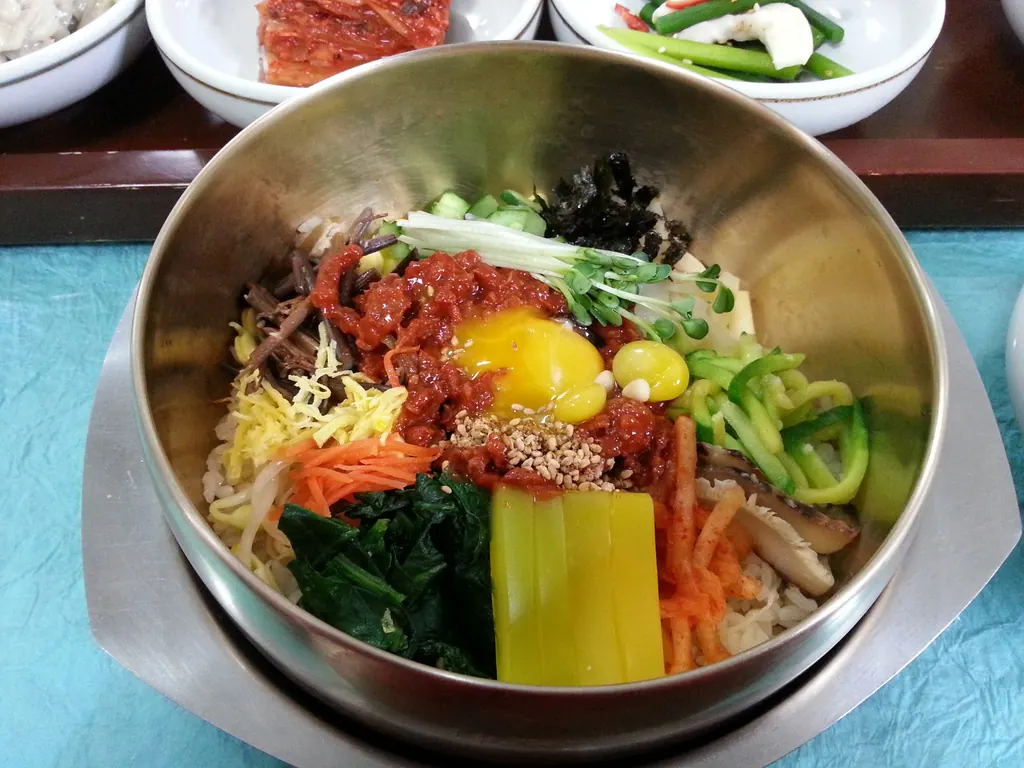
Bibimbap. Rice topped with vegetables, a little meat, gochujang chili paste and often an egg, stirred together just before eating. You can find it everywhere for around 12,000 won (about $9), but Jeonju is the city that made it famous (more below). The dolsot version comes in a hot stone bowl so the rice turns crisp at the bottom.
Naengmyeon. Cold buckwheat noodles, either in an icy, tangy beef broth (mul naengmyeon) or dressed with spicy sauce (bibim naengmyeon). It is a summer dish, though many Koreans eat it year round, often after barbecue. The Seoul average was about 12,700 won (about $9) in mid 2026.
Tteokbokki. Chewy rice cakes simmered in a sweet and spicy red sauce, often with fish cakes and a boiled egg. It is the core of Korean street food, sold from carts and tent stalls for a few thousand won. Seoul even has a whole tteokbokki street in Sindang-dong, where the dish is cooked in a pan at your table.
Kimchi jjigae and sundubu jjigae. Two everyday stews that arrive bubbling. Kimchi jjigae is sour and spicy with pork or tuna; sundubu jjigae is built around silky soft tofu.
Gimbap. Rice and fillings rolled in seaweed and sliced, the standard cheap lunch and road trip snack. The average roll in Seoul cost a little under 4,000 won (about $3) in 2026.
Fried chicken and beer. Korean fried chicken is double fried for a thin, crackling crust and served plain, with a sticky sweet and spicy glaze, or with soy and garlic. Eating it with beer even has its own word, chimaek. A whole chicken typically runs about 20,000-25,000 won (about $15-19). On summer evenings, many people have it delivered straight to the riverside parks along the Han River in Seoul.
Street snacks. Look for hotteok (pancakes filled with brown sugar syrup and nuts), bungeoppang (fish-shaped waffles with red bean paste), odeng (fish cake skewers in broth) and gyeranppang (egg bread). They are cheap, filling and most common in the colder months.
Where should you eat in Seoul?
Seoul has the most variety, but its two most useful food destinations are markets.
Gwangjang Market, near Jongno 5-ga station, is one of the oldest markets in the city and the easiest place to try several dishes in one go. Sit on a bench at one of the counters and order bindaetteok, a thick mung bean pancake fried in oil, mayak gimbap (small rolls with a mustard dip), knife-cut noodles, or yukhoe, seasoned raw beef with pear and egg yolk. It is crowded and touristy in the evenings, and some stalls have been criticized in Korean media for small portions at tourist prices, so check the posted price before you order.
Noryangjin Fisheries Market works like Jagalchi in Busan, below: buy seafood downstairs and have it prepared upstairs. Beyond the markets, neighborhoods matter more than individual restaurants. Ikseon-dong and the alleys around Jongno are good for traditional food, and the streets near the big universities are full of cheap, late-opening places.
What do Busan, Jeju and the other regions do best?
Regional food is one of the best reasons to leave Seoul. Most of these places are an easy train or flight away.
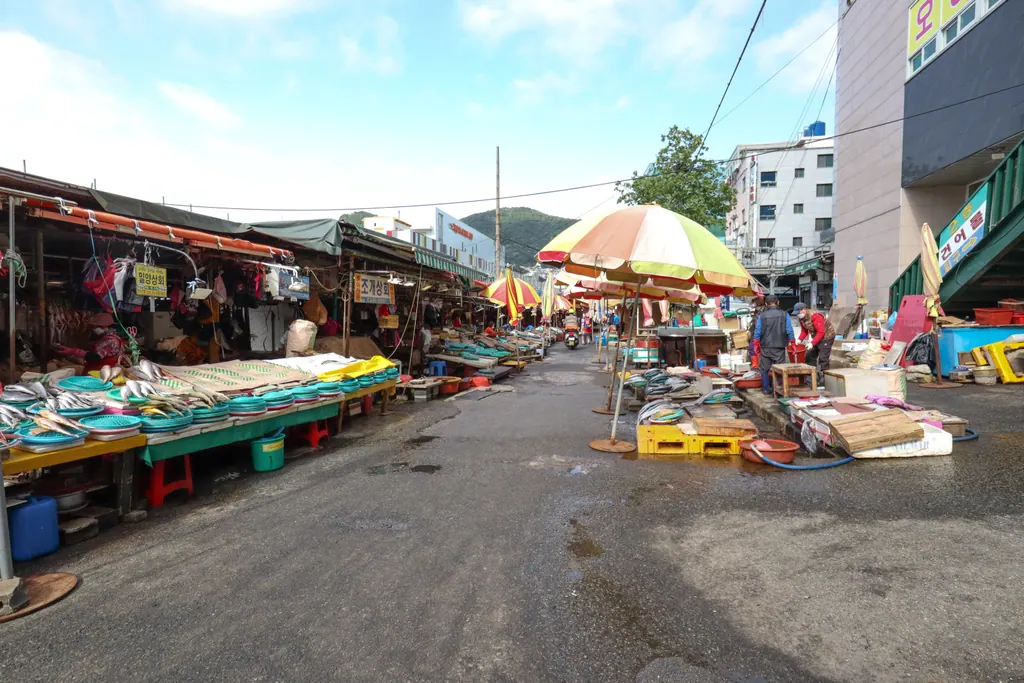
Busan. Korea's second city is a port, and Jagalchi Market is its kitchen. The usual routine is to choose live fish, octopus or shellfish on the ground floor, then take it upstairs, where restaurants slice it as hoe (raw fish) or cook it for a per person table fee, around 4,000-5,000 won (about $3-4). Busan's comfort food is dwaeji gukbap, a milky pork bone soup with rice that is commonly traced to refugees who arrived during the Korean War, often around 10,000-12,000 won (about $7-9). The same refugees are credited with milmyeon, a version of cold noodles made with wheat flour because buckwheat was hard to find.
Jeonju. In 2012, Jeonju became the first Korean city named a UNESCO City of Gastronomy. Its bibimbap is more elaborate than the standard version, with rice traditionally cooked in beef broth and toppings such as mung bean jelly and raw beef, and is usually served with bean sprout soup (kongnamul gukbap is the local hangover breakfast). Restaurants specializing in it cluster around the Jeonju Hanok Village, whose streets are lined with skewers, grilled squid and other snacks. The Nambu Market nearby holds a night market with food stalls on weekend evenings.
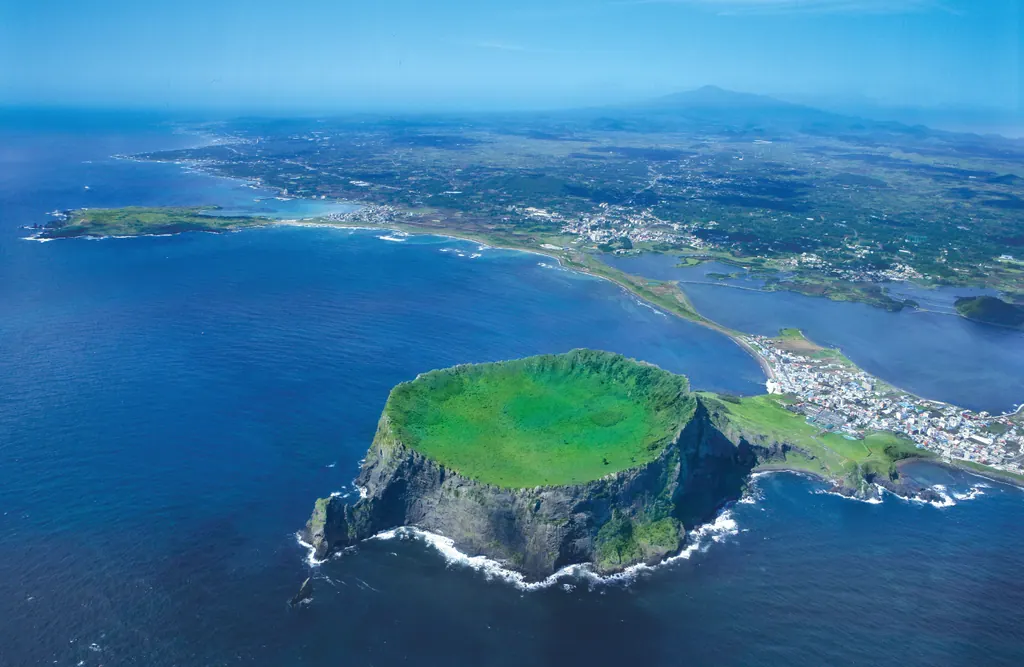
Jeju. The island's signature is heuk dwaeji, black pork from a local breed, grilled thick and often dipped in a salty anchovy sauce called melijeot. Jeju City has a dedicated black pork street, and the Dongmun Market night market sells it on skewers. Jeju is also home of the haenyeo, women who dive for abalone, sea urchin and conch without breathing equipment. Their culture was inscribed on UNESCO's intangible heritage list in 2016, and around the island you can eat abalone porridge (jeonbokjuk) and seafood they harvest. The island's tangerines, sold everywhere in winter, round things out.
Andong. This conservative old town in the southeast has two dishes worth the trip. Andong jjimdak, chicken braised with glass noodles, potatoes and dried chili in a dark soy sauce, is generally said to have taken its modern form in the chicken alley of Andong Old Market in the 1980s. A large plate for two or three often costs around 30,000-40,000 won (about $22-30). Heotjesabap is a gentler dish: rice with vegetables, tofu, fish and beef from a Confucian ancestral rite menu, eaten without the rite. Popular lore says local scholars invented it so they could eat ceremonial food without a ceremony.
Gangneung. On the east coast, the Chodang Sundubu Village near Gyeongpo Lake is a neighborhood of tofu restaurants that make soft tofu curdled with seawater. Order it plain and white with soy sauce, or as a spicy red stew. The town's other obsession is coffee: Anmok Beach is lined with independent cafes and roasters, a tradition that started with vending machine coffee on the seafront.
Gyeongju and Chuncheon. Gyeongju, the old Silla capital, is known for Hwangnam bread, small red bean pastries first made in the city in 1939, and for ssambap, rice with a spread of leaves to wrap it in, served at restaurants near the royal tombs. Day trips to Nami Island usually pass through Chuncheon, home of dakgalbi, spicy chicken stir-fried with cabbage and rice cakes on a big iron pan. Chuncheon has a whole dakgalbi street.
Can vegetarians and vegans eat well in Korea?
It takes some effort. Korean food is full of vegetables, but meat, anchovy broth and fish sauce hide in a lot of them. Most cabbage kimchi contains salted seafood, many soups start with anchovy or beef stock, and "vegetable" dishes like japchae often include strips of meat. Saying "I don't eat meat" (gogi an meogeoyo) will not reliably cover fish or broth.
Temple food is the best way in. Korean Buddhist cooking avoids meat and fish as well as the five pungent vegetables (garlic, onion, chives, leeks and green onions), relying on seasonal greens, mushrooms, tofu and fermented soy instead. In Seoul, the Korean Temple Food Center near Anguk station, run by the Jogye Order, offers cooking classes, and many temples include meals in their Templestay programs. Seoul also has a growing number of vegan and vegetarian restaurants, concentrated around Itaewon and the student areas, and apps such as HappyCow are more reliable than asking at random restaurants. Outside Seoul, bibimbap without meat or egg is the safest fallback.
How do you order and pay?
A few habits make eating out much easier:
- Use the bell. Many tables have a call button. Otherwise, a polite "jeogiyo" ("excuse me") gets attention. Nobody will hover.
- Water and cutlery are often self-service. Look for a water dispenser, and check the drawer under the table for spoons and chopsticks.
- Pay at the counter on the way out. Bring your bill to the register. There is no tipping in Korea, and nobody expects it.
- Kiosks and tablets are common. Many fast food places and cafes use touch screens, often with an English option.
- Use a map app. Naver Map and KakaoMap are more accurate than Google Maps in Korea and show opening hours and reviews.
Eating alone has become normal, and there is even a word for it, honbap. Rice soups, noodles, gimbap shops, convenience stores and market counters all work well for one person. Barbecue is harder because of the two serving minimum, but a growing number of restaurants offer single portions or counter seating for solo diners. If you travel alone, our solo travel pages have more ideas.
What does food cost in South Korea?
Korea is cheaper than Japan for eating out but no longer a bargain, and prices in Seoul have risen every year. These are typical 2026 prices:
| What | Typical price |
|---|---|
| Gimbap roll | 3,500-5,000 won (about $3-4) |
| Tteokbokki at a stall | 4,000-6,000 won (about $3-4) |
| Kimchi jjigae with rice and banchan | 9,000-10,000 won (about $7) |
| Bibimbap | 11,000-13,000 won (about $8-10) |
| Naengmyeon | 12,000-14,000 won (about $9-10) |
| Samgyeopsal, one serving | 18,000-23,000 won (about $13-17) |
| Whole fried chicken | 20,000-25,000 won (about $15-19) |
| Bottle of soju or beer in a restaurant | 5,000-6,000 won (about $4) |
Outside Seoul, prices are usually a little lower. Lunch is the cheapest meal of the day, since many restaurants offer set lunches for office workers.
Planning a food trip
If you have a week, you can taste most of the country: start in Seoul with Gwangjang Market and a barbecue night, take the train to Jeonju for bibimbap, then head on to Busan for Jagalchi and pork soup. Add Gangneung for tofu and coffee, or Jeju for black pork, if you have more time. Go hungry, follow the queues, and do not be shy about asking for more kimchi.
For more on the country, see our South Korea page and everything we have written about food and drink. If you are combining Korea with another stop in the region, our guide to food in Taiwan covers a very different night market culture.
Frequently asked questions
Do you tip in restaurants in South Korea?
No. Tipping is not part of Korean dining culture, and the price on the menu is what you pay. You usually settle the bill at the counter on your way out.
Are the side dishes in Korean restaurants free?
Yes. Banchan come with the meal at no extra charge, and refills are free at most restaurants. Many places have a self-service station where you can top them up yourself.
Is Korean food very spicy?
A lot of it is, thanks to gochujang and chili flakes, but plenty is not: bibimbap lets you add the chili paste yourself, and soups like dwaeji gukbap, seolleongtang and plain sundubu are mild. Ask for less spice with 'deol maepge'.
Can you eat Korean barbecue alone?
It can be tricky, since many barbecue restaurants require at least two servings. More places now offer single portions or counter seating for solo diners, and lunch sets are another option.
Is kimchi vegan?
Usually not. Most cabbage kimchi is made with salted shrimp or fish sauce. Temple food restaurants and vegan restaurants make versions without seafood.
- Beijing, Jeonju and Norwich named UNESCO Creative Cities, ASEF culture360
- Culture of Jeju Haenyeo (women divers), UNESCO Intangible Cultural Heritage
- Kimjang, making and sharing kimchi, UNESCO Intangible Cultural Heritage
- Wheat noodles that comforted homesick N. Korean refugees are now Busan specialty, The Korea Times
- Average kimbap price in Seoul, The Korea Herald
- Heotjesabap, Korean Food Promotion Institute (Hansik)
- Jagalchi Fish Market, Lonely Planet