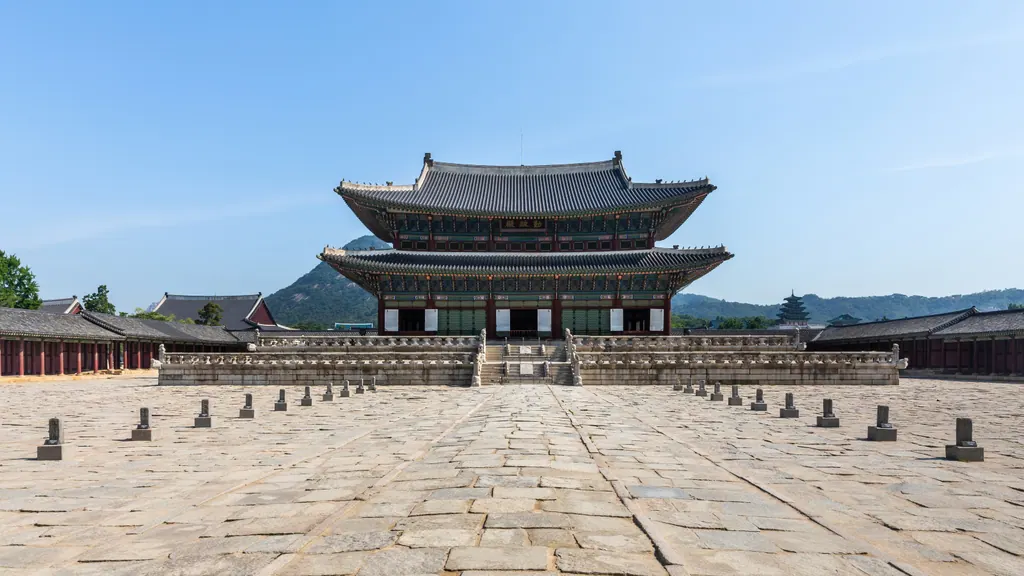
Stand in the main courtyard of Gyeongbokgung on a clear morning and it is easy to believe you are looking at six centuries of unbroken history. The throne hall rises from its two-tiered stone platform, with Bugaksan mountain right behind the roofline and rank stones for the royal court in neat rows across the granite. Yet much of the palace was torn down during the Japanese colonial period, and a large share of what you walk through has been rebuilt since 1990, piece by piece, from old plans and photographs.
That is South Korea in short: a country that moves at high speed and has spent enormous effort holding on to what it nearly lost. This guide follows that thread from Seoul's palaces to the Silla tombs of Gyeongju, the mask dancers of Andong, the paper makers of Jeonju and the temples of Busan, then covers the festivals worth timing a trip around and the courtesies that matter once you are there.
Where should you start with Seoul's palaces?
Seoul has five royal palaces from the Joseon dynasty (1392-1910), and two of them deserve most of your time.
Gyeongbokgung is the grand one, founded in 1395 as the main seat of the dynasty. Come for the scale: the throne hall, Gyeonghoeru banquet pavilion on its pond and the views up to the mountains. The royal guard changing ceremony at Gwanghwamun gate is a free extra. Entry was around 3,000 won (about $2) for adults in 2026, and the palace is closed on Tuesdays.
Changdeokgung is the one many travelers end up preferring. It was built in 1405 to follow the hills rather than flatten them, which is a big part of why UNESCO listed it as a World Heritage Site in 1997. Behind it lies Huwon, the Secret Garden, a wooded valley of ponds and pavilions where kings read, wrote poetry and fished. Huwon can only be seen on a timed guided tour with limited places, costing around 5,000 won (about $4) on top of the 3,000 won palace ticket in 2026. Tickets go on sale online several days ahead and sell out in spring and autumn, so book early. Changdeokgung is closed on Mondays.
A short walk south, Jongmyo Shrine holds the spirit tablets of the Joseon kings and queens. It was among the first Korean sites on the UNESCO list in 1995, and the royal ancestral rite performed there, Jongmyo Jerye, with its court music, is one of the oldest continuously performed ceremonies in the world. It is quiet and austere, a good contrast to the palaces.
One tip saves money: anyone wearing hanbok, the traditional Korean dress, gets into the palaces and Jongmyo free. Rental shops cluster around Gyeongbokgung.
Between Gyeongbokgung and Changdeokgung sits Bukchon Hanok Village, a hillside of traditional tile-roofed houses where people still live. Overtourism became such a problem that the Jongno district introduced a curfew on the busiest lanes: since March 2025, tourists may only enter the "red zone" around Bukchon-ro 11-gil between 10 a.m. and 5 p.m., and visitors outside those hours risk a fine of up to 100,000 won (about $75). Keep your voice down: the doors you are photographing are people's front doors.
Why is Gyeongju called a museum without walls?
For almost a thousand years, from 57 BC to AD 935, Gyeongju was the capital of the Silla kingdom, which unified most of the Korean peninsula in the 7th century. The past is simply lying around: grassy royal burial mounds in the middle of town, stone pagodas in rice fields and Buddhist carvings across Namsan mountain. UNESCO listed the Gyeongju Historic Areas as a World Heritage Site in 2000.
Start at Daereungwon, a park of huge grass-covered tumuli, the burial mounds of Silla kings and nobles. One of them, Cheonmachong, has been opened so you can see how the tombs were built and where a famous painting of a flying horse was found. From there it is an easy walk to Cheomseongdae, a 7th-century stone tower often described as the oldest surviving astronomical observatory in East Asia, and to Donggung Palace and Wolji Pond, which are at their best after dark, when the rebuilt pavilions are lit and reflected in the water.
About 30 minutes east of the center, Bulguksa temple and Seokguram grotto were listed together by UNESCO in 1995. Bulguksa is the showpiece of Silla Buddhist architecture, with stone stairways shaped as bridges to the Buddha's land and two famous pagodas. Up the mountain, Seokguram is an artificial granite cave around a seated Buddha, carved in the 8th century and now seen through glass. The government scrapped admission fees at most heritage temples run by the Jogye Order in May 2023, but check the temple's own website for the latest rules before you go.
With an extra half day, add Yangdong Folk Village, north of the city, one of Korea's two great clan villages.
What makes Andong's Hahoe village special?
Hahoe Folk Village sits inside a loop of the Nakdong River, which is what its name refers to. The Ryu clan has lived here for around 600 years, and the village still has thatched farmhouses and tile-roofed yangban (aristocrat) homes lived in by families. In 2010, UNESCO listed Hahoe together with Yangdong as the Historic Villages of Korea. Climb Buyongdae cliff on the opposite bank for the classic view of the whole village. Entry has been around 5,000 won (about $4) for adults, according to recent listings.
Hahoe is also home to the Hahoe Byeolsin-gut Talnori, a village mask dance drama in which commoners in wooden masks mock monks, aristocrats and scholars. Korean mask dance, talchum, was added to UNESCO's list of intangible cultural heritage in 2022. Regular performances are held at the village, and every autumn the Andong International Mask Dance Festival brings troupes from around Korea and abroad. In 2026, it ran from September 24 to October 4. Nearby, the Confucian academy of Byeongsan Seowon is worth the short drive.
Why go to Jeonju for hanok and hanji?
Jeonju Hanok Village is one of the largest clusters of traditional houses in any Korean city, with more than 700 hanok according to the village's official site. Many are guesthouses, tea rooms and craft shops, which makes this the easiest place in Korea to sleep on a heated ondol floor under a tiled roof. Within a few minutes' walk you have Gyeonggijeon Shrine, which holds a portrait of Taejo, the founder of the Joseon dynasty, and Jeondong Cathedral, a red brick church built on the site where Korea's first Catholic martyrs were executed.
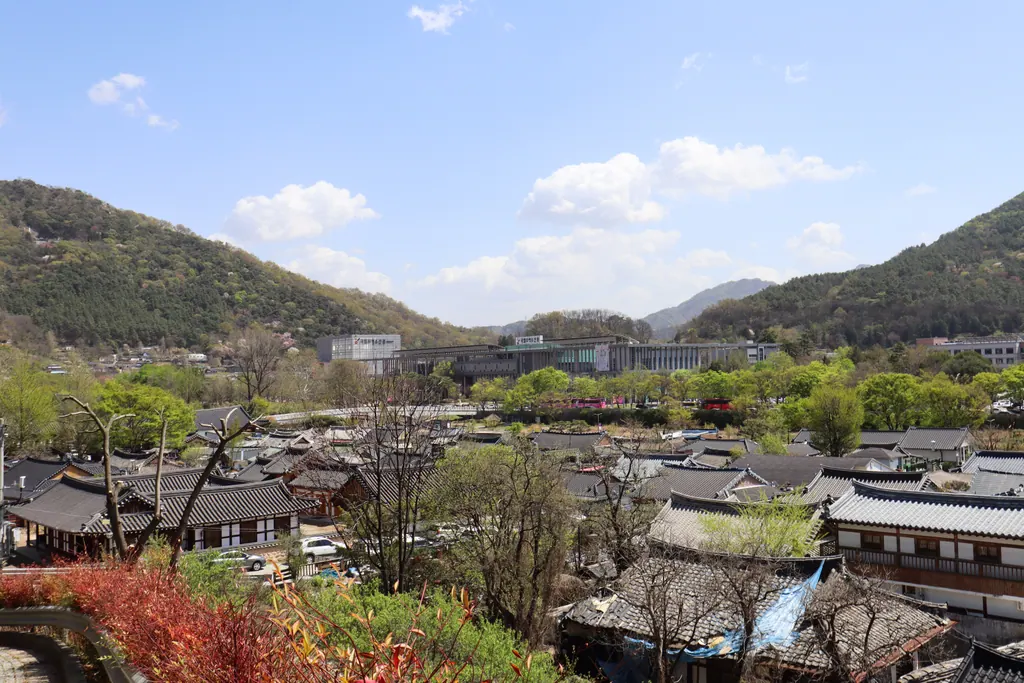
Jeonju is also Korea's hanji capital. Hanji is paper made from the inner bark of the paper mulberry tree, strong enough to be used for windows, lanterns and even clothing. Several workshops in and around the hanok village let you try making a sheet yourself or fold a small object, and the Jeonju Hanji Culture Festival is held in autumn; the 30th edition took place in early October 2026. Andong has its own hanji tradition and workshops too.
What is a temple stay really like?
South Korea has a well-run program that lets visitors stay overnight at Buddhist temples. Through the Templestay program, run by the Cultural Corps of Korean Buddhism, you sleep on a floor mat, eat simple vegetarian temple food, take part in the early morning service and usually try meditation, a tea ceremony with a monk and the 108 prostrations. Wake-up is often before 4 a.m.
Prices vary by temple, but a standard overnight stay costs around 70,000-100,000 won (about $50-75) per adult. In September 2026, a discount for foreign visitors brought the price down to 30,000 won (about $22) at 19 temples. Many temples run English-language programs, from Jogyesa in central Seoul to Beomeosa in Busan and the seven mountain monasteries UNESCO listed in 2018. Booking is through the official Templestay website.
What does Busan offer beyond the beach?
South Korea's second city is mostly visited for Haeundae Beach, but it has a different kind of history from Seoul. During the Korean War, Busan was never taken, and refugees poured in and built homes on any slope they could find.
Gamcheon Culture Village grew out of one of those refugee settlements. Its stepped, pastel houses climb a hillside above the harbor, and since an art project began in 2009, the alleys have been filled with murals, sculptures and small galleries. Entry is free. As in Bukchon, residents live here, so stick to the marked route. The UN Memorial Cemetery in Nam-gu, the only United Nations cemetery in the world, is a calm and moving place to understand what the war meant.
For temples, Beomeosa on the slopes of Geumjeongsan was founded in 678 and is one of the main temples of southeastern Korea, with forest trails behind it. Haedong Yonggungsa, built on rocks right above the sea on the city's northeast coast, is the one on everyone's camera. Go early on a weekday if you can.
Which festivals and holidays should you plan around?
Korea's festivals follow both the solar and the lunar calendar, so dates shift every year. These are the big ones, with months checked against the Korea Tourism Organization's Visit Korea listings for 2026.
| Festival | Where | When |
|---|---|---|
| Seollal (Lunar New Year) | Nationwide | January or February; February 6-9, 2027 |
| Jeju Fire Festival | Saebyeol Oreum, Jeju | March |
| Lotus Lantern Festival (Yeondeunghoe) | Jongno and Jogyesa, Seoul | The weekend before Buddha's Birthday, usually May; the 2026 parade was on May 16 |
| Buddha's Birthday | Temples nationwide | April or May; around May 13, 2027 |
| Boryeong Mud Festival | Daecheon Beach, Boryeong | Late July to early August; July 24 to August 9, 2026 |
| Chuseok (harvest festival) | Nationwide | September or October; September 14-16, 2027 |
| Andong International Mask Dance Festival | Andong | Late September to early October |
| Silla Culture Festival | Gyeongju | October; October 9-11, 2026 |
| Jinju Namgang Yudeung Festival | Jinju | October; October 3-18, 2026 |
| Busan International Film Festival | Busan | October; October 6-15, 2026 |
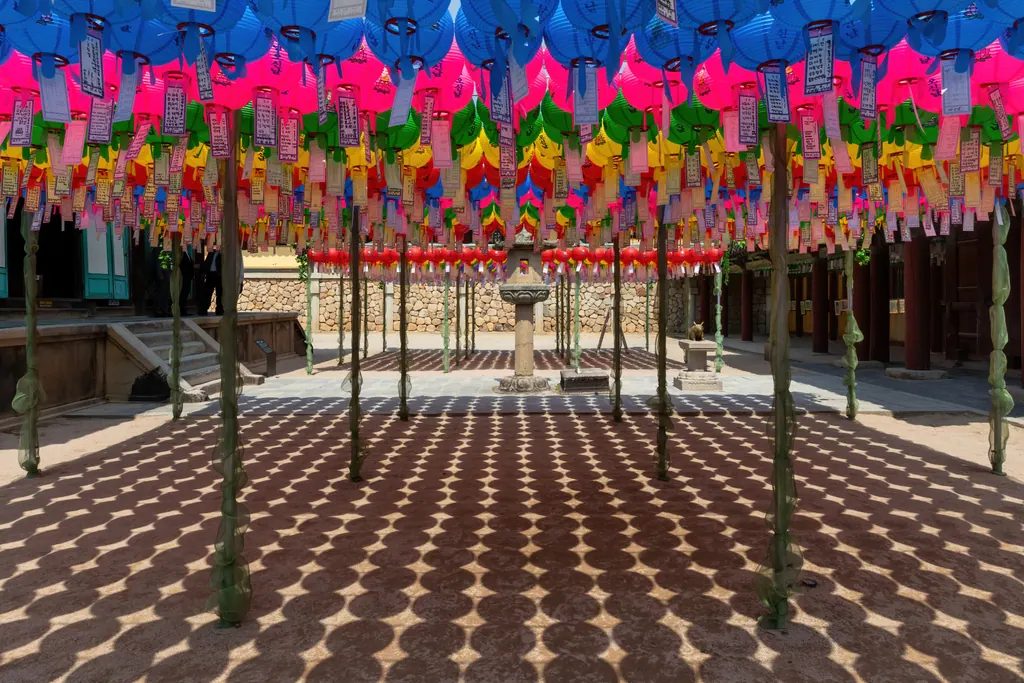
Buddha's Birthday is the most beautiful time to see the temples. For weeks beforehand, courtyards fill with rows of paper lanterns, and Seoul's Lotus Lantern Festival, added to UNESCO's intangible heritage list in 2020, ends with a night parade of tens of thousands of lanterns along Jongno. The Jinju Namgang Yudeung Festival floats lanterns on the Nam River below Jinju Fortress, recalling the 1592 siege by Japanese forces, and the main area is free. Boryeong is the opposite in spirit: a huge, muddy beach party with mud slides, wrestling pits and concerts, mostly for a young crowd. The Busan International Film Festival, founded in 1996, is one of Asia's biggest film festivals, with public screenings.
Seollal and Chuseok are family holidays, not street festivals. Millions travel to their hometowns, so trains and express buses sell out weeks ahead, while Seoul turns unusually quiet. Many small restaurants and shops close on the main day, and some for two or three days, though convenience stores, chain cafes and many tourist-area restaurants stay open. Museums often close on the main holiday day. On the plus side, the royal palaces and Jongmyo are usually open and free during the holiday, as they were during Chuseok 2026, when only paid programs like the Huwon tour still charged.
How do you behave as a guest?
Koreans are forgiving with foreigners, but a few habits are noticed and appreciated.
- Shoes come off in homes, hanok guesthouses, temple halls and restaurants with floor seating. Look for a step up or a row of shoes at the entrance. Clean socks are a good idea.
- A small bow works as hello, thank you and goodbye. A slight nod of the head is fine in shops; a deeper bow is for elders.
- Use two hands, or your right hand with your left hand touching your wrist or forearm, when giving or receiving anything from an older person: money, a card, a gift or a glass.
- At the table, wait for the oldest person to start, do not stick chopsticks upright in your rice, and pour drinks for others rather than for yourself.
- At temples, dress modestly, speak quietly, do not use the central door of the main hall and ask before photographing monks or ceremonies.
- Tipping is not part of Korean culture, and in most places, nobody will expect it.
A route that ties it together
If culture is the main reason for your trip, a week works well: two or three days in Seoul, then the KTX train to Gyeongju for two nights, with Andong and Hahoe as an overnight side trip and Busan under an hour away by train. Jeonju fits best on the way back to Seoul. Add a temple stay on any night you want a break from the cities.
If your dates are flexible, aim for late April to May, when Buddha's Birthday lanterns are up, or late September to October, when the mask dance festival, the Jinju lanterns, the Silla Culture Festival and the film festival all follow each other and the weather is at its best. For more trip ideas, browse our South Korea guides, the culture section, and our practical travel tips. Combining Korea with another country? Our guide to festivals and heritage in the Philippines covers a very different calendar.
Frequently asked questions
Is it free to enter Korean palaces if you wear hanbok?
Yes. Visitors wearing hanbok get free entry to Gyeongbokgung, Changdeokgung, the other Seoul palaces and Jongmyo Shrine. The paid Huwon Secret Garden tour at Changdeokgung is not included.
Are tourist sites open in Korea during Chuseok and Seollal?
Most royal palaces stay open and are often free during the holidays, as they were during Chuseok 2026. Many small restaurants, shops and national museums close on the main holiday day, and trains between cities sell out weeks ahead.
When is the lantern festival in Korea?
Seoul's Lotus Lantern Festival is held around Buddha's Birthday, usually in May, with a night parade along Jongno. The Jinju Namgang Yudeung Festival, with lanterns floating on the Nam River, runs for about two weeks in October.
How much does a temple stay in Korea cost?
A standard overnight Templestay costs around 70,000-100,000 won (about $50-75) per adult, depending on the temple. Discounts for foreign visitors have brought the price to 30,000 won (about $22) at selected temples in some months.
How many days do you need in Gyeongju?
Two days covers the main sights: Daereungwon, Cheomseongdae and Wolji Pond on one day, and Bulguksa and Seokguram on the other. Add a third day for Namsan mountain or Yangdong Folk Village.
- Changdeokgung Palace Complex, UNESCO World Heritage Centre
- Gyeongju Historic Areas, UNESCO World Heritage Centre
- Historic Villages of Korea: Hahoe and Yangdong, UNESCO World Heritage Centre
- Korea's Top 14 Autumn Festivals in 2026, VISITKOREA
- Korea's Top 10 Summer Festivals for 2026, VISITKOREA
- Six 'global festivals' in Korea attracting world hype in 2026, Korea.net
- Four royal palaces, Jongmyo Shrine and royal tombs free for four days, The Korea Herald
- Templestay, Cultural Corps of Korean Buddhism