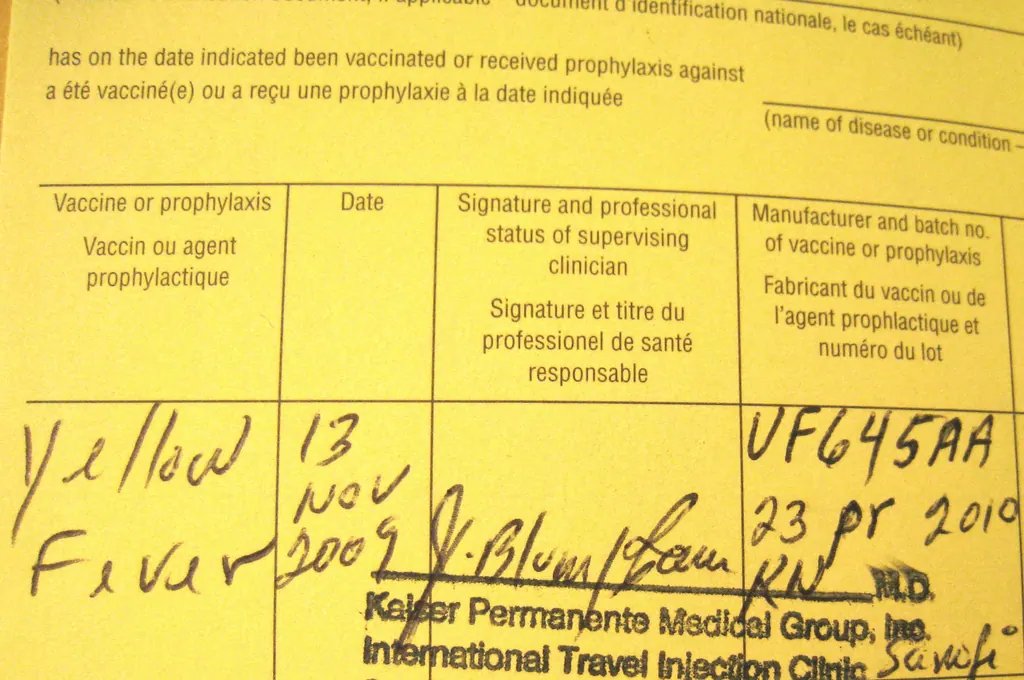
Airlines and border officers do not care that your doctor said the shot was fine. They want to see one specific booklet: the International Certificate of Vaccination or Prophylaxis, better known as the yellow card or ICVP. For Americans heading to parts of Africa or South America, that little booklet can decide whether you board, clear immigration, or sit in quarantine.
This guide explains what the certificate is, which destinations ask for it, how long it lasts, and how to get one in the United States before you fly.
What the yellow card actually is
The ICVP is the official document recognized under the International Health Regulations for recording yellow fever vaccination. CDC calls it the yellow card. Clinics that give the vaccine also fill out and stamp the certificate. CDC itself does not issue ICVPs and does not keep copies of your vaccination record.
A valid yellow fever entry on the card needs:
- Your name written exactly as it appears in your passport
- The words "Yellow Fever" in the disease fields
- The vaccination date in day-month-year form (day in numbers, month in letters)
- The clinician's handwritten signature (a signature stamp alone is not enough)
- The Uniform Stamp of the designated yellow fever vaccination center
Without that stamp and signature combination, many countries will treat the certificate as invalid even if you really received the shot.
Who needs a yellow fever vaccine certificate
Two different questions get mixed up: Do I need the vaccine for my health? and Will a country demand proof of vaccination to let me in?
Entry requirements. Some countries require an ICVP from all arriving travelers above a set age (often 9 months), including people flying straight from the United States. Ghana and Angola are clear examples on CDC destination pages as of 2026: proof of yellow fever vaccination is required for entry. Other countries only ask for the certificate if you arrive from, or transit through, a country with a risk of yellow fever transmission. A short layover can count. The order of a multi-country trip therefore matters.
Health recommendations. CDC may recommend yellow fever vaccination for travel to areas with a risk of infection even when the destination does not require a certificate. Brazil is a common case for Americans: as of CDC's April 2025 update (still shown on the traveler view page in 2026), Brazil does not require the vaccine for entry, but CDC recommends it for travel to many states, including Rio de Janeiro, São Paulo, Amazonas, and the area around Iguaçu Falls. Nigeria is similar in reverse: CDC recommends the vaccine for travelers 9 months and older, while a certificate is generally not required for a direct arrival from the United States, but it is required if you arrive from a risk country.
Always check the current CDC destination page and the embassy of every country on your itinerary. Rules change, and transit countries can surprise you.

How long the certificate lasts
Under WHO's amendment to the International Health Regulations, which took effect on 11 July 2016, a completed yellow fever ICVP is valid for the life of the person vaccinated. That applies to certificates issued before and after the change. Countries that are parties to the IHR are not supposed to demand a booster or a new certificate just because ten years have passed.
The certificate becomes valid for entry purposes 10 days after the primary vaccination date. If you get the shot on Monday and fly on Wednesday, you may still be refused. Plan the appointment at least 10 days before the first country that will check the card, and leave room for clinic wait times.
Older cards sometimes still show a 10-year expiry line. CDC notes that the vaccine remains valid for life even when an old card printed an expiry date. Keep the original booklet. A photocopy is usually not enough at the border.
Where Americans get the vaccine and the certificate
In the United States, yellow fever vaccine is given only at designated yellow fever vaccination centers. State and territorial health departments authorize those centers and issue the Uniform Stamp. CDC publishes a searchable registry of clinics so you can find one near you.
Book early. Some cities have few authorized clinics, and the vaccine is not stocked everywhere. Ask the clinic three things when you call:
- Do they currently have yellow fever vaccine in stock?
- Will they complete and stamp an ICVP at the same visit?
- What do they charge? (Expect a vaccine fee plus an administration or certificate fee; prices vary widely by clinic.)
Bring your passport or a clear printout of the name as it appears on the passport so the card matches immigration documents.
Medical waivers when you cannot take the vaccine
Yellow fever vaccine has real contraindications and precautions. CDC lists absolute contraindications that include age under 6 months, certain forms of severe immunosuppression, and known severe allergy to a vaccine component. Precautions include age 60 and older, pregnancy, breastfeeding, and some milder immune issues. In those cases a yellow fever vaccine provider may complete the Medical Contraindications to Vaccination section of the ICVP and give you a signed waiver letter on clinic letterhead that also carries the Uniform Stamp.
A waiver is not a free pass. Acceptance is up to the destination country. Some will accept it; others may quarantine you, refuse entry, or still push for vaccination on arrival. If you have a contraindication, talk with a travel medicine clinician well before you book nonrefundable tickets, and confirm the destination's policy in writing when you can.
Practical checklist before you fly
- Confirm both CDC recommendations and country entry rules for every stop, including transit.
- Get vaccinated at a designated U.S. center and leave with a completed, stamped ICVP.
- Count 10 full days from the shot to the first inspection.
- Pack the original yellow card in your carry-on, never in checked luggage.
- Photograph the stamped page as a backup for your records (border officers still want the paper original).
- If you already have an old card from before 2016, keep it; lifetime validity applies, but bring it to a clinic if the details are incomplete or hard to read.
- For Ghana-specific shots and malaria pills beyond yellow fever, see our companion guide on Ghana vaccine requirements.
Yellow fever is a serious disease. The certificate is paperwork. Treat both seriously, and you avoid the worst airport surprise on an otherwise carefully planned trip. For broader U.S. government risk language on destinations, our explainer on State Department travel advisory levels helps you read the other side of trip planning. Country health pages live under CDC Travelers' Health, and entry rules for visas sit beside them in our visas and entry section when you need the immigration half of the story.
Frequently asked questions
Is a yellow fever vaccine certificate valid for life?
Yes. Under WHO rules in force since 11 July 2016, a completed yellow fever ICVP is valid for the life of the person vaccinated, including older certificates. It becomes usable for entry 10 days after the primary dose.
Do Americans need a yellow fever certificate for Brazil?
Brazil does not require yellow fever vaccination for entry. CDC still recommends the vaccine for travel to many Brazilian states and for Iguaçu Falls. Check the current CDC Brazil page before you go.
Where can I get a yellow fever shot in the United States?
Only at designated yellow fever vaccination centers authorized by state or territorial health departments. Use the CDC yellow fever vaccination clinic registry to find a location, and ask them to stamp an ICVP at the same visit.
What if I cannot take the yellow fever vaccine?
A designated provider can issue a medical waiver on the ICVP plus a stamped letter. Acceptance is up to the destination country, so confirm their policy before you travel.
Can a layover trigger a yellow fever certificate requirement?
Yes. Some countries require proof of vaccination if you arrive from or transit through a yellow fever risk country, even for a short connection. Check every stop on your itinerary.