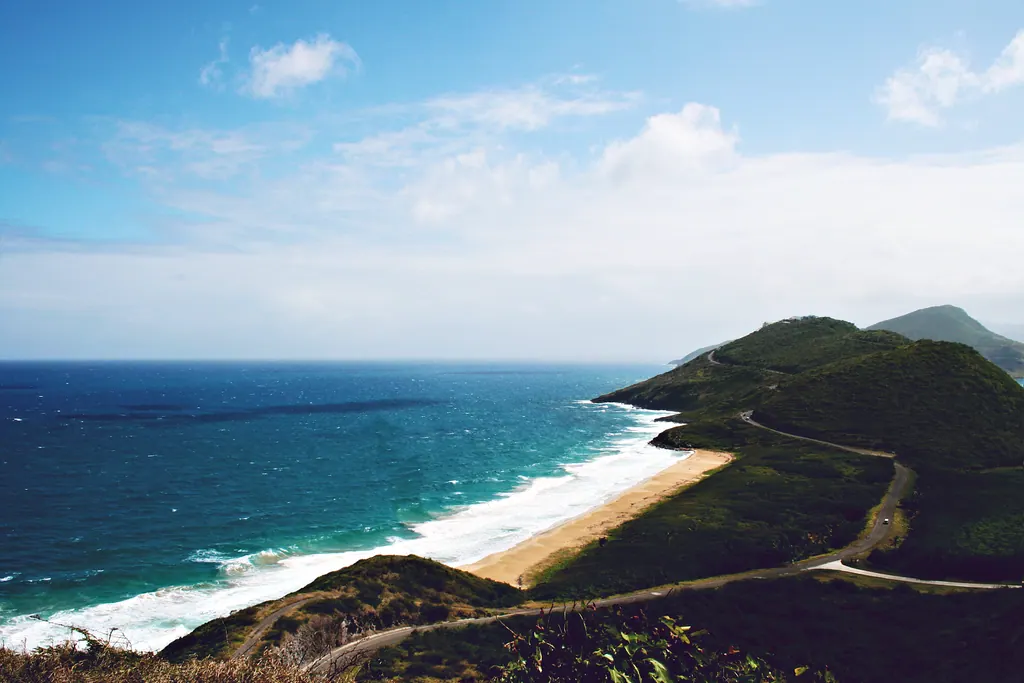
St. Kitts and Nevis is the smallest country in the Americas, two green volcanic islands in the northern part of the Eastern Caribbean. St. Kitts is the larger and livelier of the two, with the capital Basseterre, a cruise pier and most of the hotels. Nevis, across a narrow strait, is quieter, rounder and dominated by a single cloud-capped peak.
For a U.S. traveler the islands are easy: flights connect St. Kitts with several U.S. cities, English is the official language, and dollars are accepted almost everywhere. Here are the things we would put on a first trip, as checked on November 3, 2026.
1. Walk the Walls of Brimstone Hill Fortress
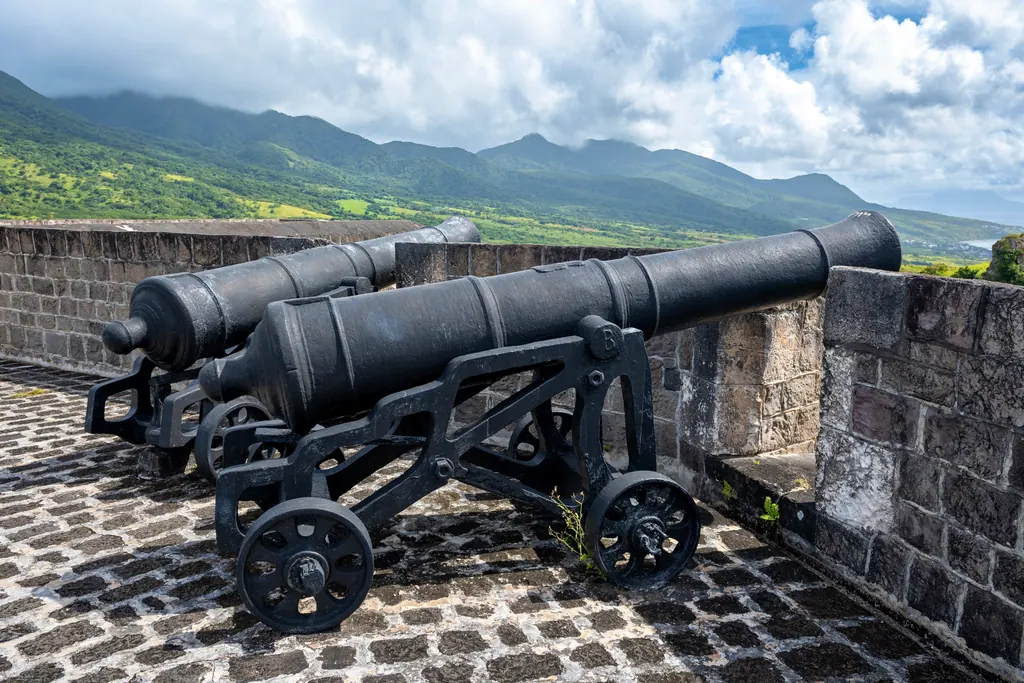
If you do only one thing on St. Kitts, make it Brimstone Hill. The fortress sits on a steep volcanic hill on the west coast and was built by the British in the 17th and 18th centuries. It has been a UNESCO World Heritage Site since 1999, listed as an exceptionally well-preserved example of colonial military architecture in the Caribbean.
Walk up to the Citadel for the view. On a clear day you can see Sint Eustatius and Saba to the northwest. Allow two to three hours, and go early before the heat and the cruise excursions arrive.
2. Ride the St. Kitts Scenic Railway
The narrow-gauge railway was built to carry sugar cane from the fields to the mill in Basseterre. Today it carries visitors along 18 miles (29 km) of track on a double-decker train past old sugar estates, villages and the coast. The full circuit of about 30 miles (48 km) is done partly by train and partly by bus and takes about three hours.
The schedule is built around cruise ship days, so book ahead and check which days the train runs during your stay.
3. Spend a Day on the Southeast Peninsula
The road south from Frigate Bay over the hills of the Southeast Peninsula is one of the prettiest drives in the Caribbean. Stop at Timothy Hill for the view of the Atlantic on one side and the Caribbean on the other, then continue to the beaches at the end of the peninsula.
4. Pick Your Beach
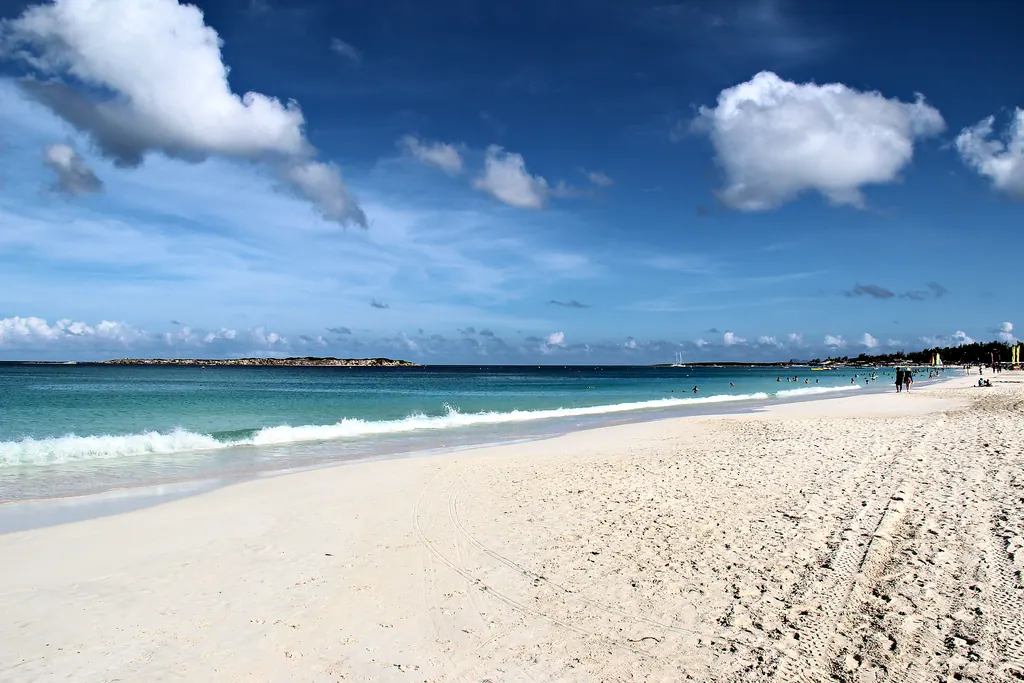
St. Kitts has two very different coasts. The Atlantic side is wilder, with stronger waves. The Caribbean side is calmer and better for swimming. Good options:
- South Friars Bay for beach bars and calm water.
- Cockleshell Bay at the southern tip, with views straight across to Nevis.
- Frigate Bay, close to the hotels, with a lively strip on the Caribbean side.
5. Take the Ferry to Nevis
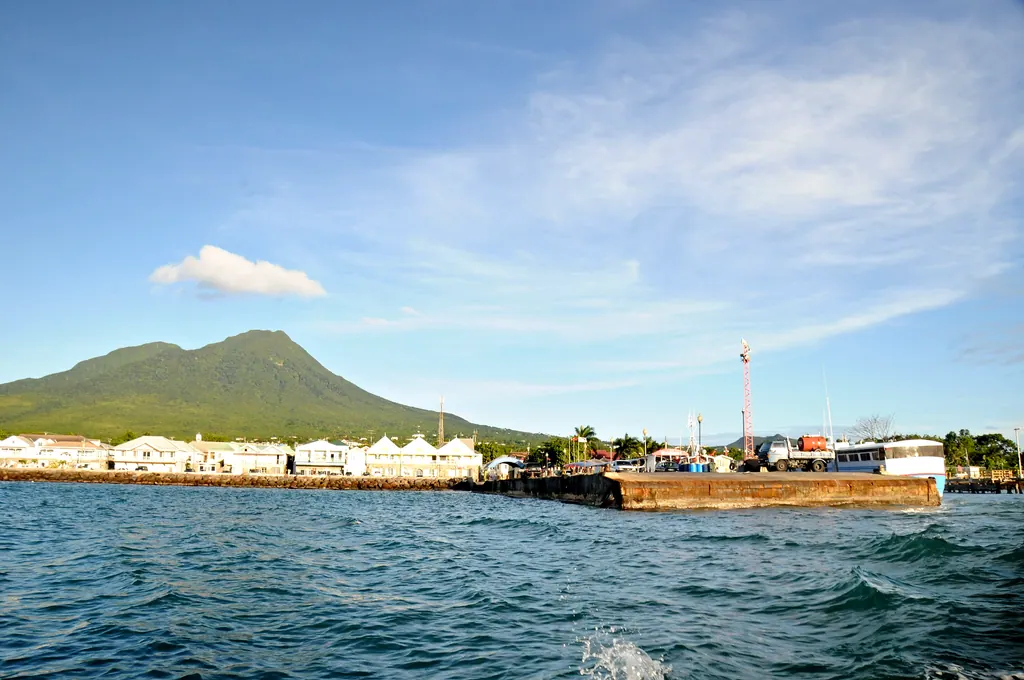
The passenger ferry from Basseterre to Charlestown on Nevis takes about 25-45 minutes, depending on the boat, and a one-way ticket costs about EC$30-40 (about $11-15). If you are traveling with a car, the Sea Bridge car ferry runs from Majors Bay on St. Kitts to Cades Bay on Nevis in about 20-30 minutes.
You can do Nevis as a day trip, but it is worth a night or two.
6. Explore Charlestown and Alexander Hamilton's Birthplace
Charlestown is a small, walkable town of stone and wooden buildings. The Museum of Nevis History, run by the Nevis Historical and Conservation Society, stands on the site traditionally linked to the birth of Alexander Hamilton, who was born on Nevis in the 1750s. There is no document that proves the exact spot, but the museum has an exhibition on Hamilton's life and on the island's history.
7. Relax on Pinney's Beach
Pinney's Beach runs for miles along the west coast of Nevis, just north of Charlestown. It is long, wide and backed by palms, with a handful of beach bars. On most days you will find plenty of space to yourself.
8. Swim and Paddle at Oualie Beach
On the northwest corner of Nevis, Oualie Beach has calm, shallow water and is a base for kayaking, paddleboarding and snorkeling. It is also where water taxis from St. Kitts often land.
9. Hike a Volcano
Both islands are volcanic, and both have a peak you can climb with a guide.
- Mount Liamuiga on St. Kitts rises to 3,793 feet (1,156 m). The hike goes through rainforest to the crater rim and takes most of a day.
- Nevis Peak reaches 3,232 feet (985 m). The trail is steep, muddy and often in the clouds, so it is for fit hikers only.
Book a local guide for both. The trails are not always clearly marked.
10. Visit the Old Sugar Estates
Sugar shaped the history of both islands, including the enslavement of thousands of Africans who worked the plantations. Several former estates on St. Kitts and Nevis have been turned into gardens, restaurants or small hotels. A visit gives you a look at the islands' past as well as some of the best lunch settings on the islands.
11. Walk Around Basseterre
The capital of St. Kitts has a compact center around The Circus, a small roundabout modeled on Piccadilly Circus in London, and Independence Square, once the site of a slave market. Combine a short walk with lunch near the waterfront.
12. Watch the Monkeys
St. Kitts and Nevis have a large population of green vervet monkeys, brought to the islands centuries ago. You will often see them on the Southeast Peninsula and along forest roads. Do not feed them.
Practical Info for Americans
- Entry: U.S. citizens need a valid passport, but no visa for visits of up to 90 days. You must complete the electronic travel authorization (eTA) online or in the e-Border app before you travel. As of November 3, 2026, the fee is $17, and you can apply up to three months ahead.
- Money: The currency is the Eastern Caribbean dollar, pegged at EC$2.70 = $1. U.S. dollars are widely accepted, but you may get change in EC dollars. See our guide to money in the Caribbean.
- Safety: As of July 7, 2026, the U.S. State Department rates St. Kitts and Nevis at Level 1: Exercise Normal Precautions.
Still deciding between islands? Our guide to which Caribbean island to choose can help, and you can find more on St. Kitts and Nevis and the rest of the Caribbean.
Frequently asked questions
What is St. Kitts and Nevis known for?
Brimstone Hill Fortress, a UNESCO World Heritage Site, the scenic railway on St. Kitts, quiet beaches, volcanic peaks and Nevis as the birthplace of Alexander Hamilton.
How do you get from St. Kitts to Nevis?
By passenger ferry from Basseterre to Charlestown in about 25-45 minutes, or by the Sea Bridge car ferry from Majors Bay to Cades Bay in about 20-30 minutes.
Do Americans need a visa for St. Kitts and Nevis?
No visa is needed for stays of up to 90 days, but U.S. citizens must apply for an electronic travel authorization (eTA) before travel. As of November 3, 2026, it costs $17.
Can you use U.S. dollars in St. Kitts and Nevis?
Yes. U.S. dollars are widely accepted, although the local currency is the Eastern Caribbean dollar, pegged at EC$2.70 to $1.