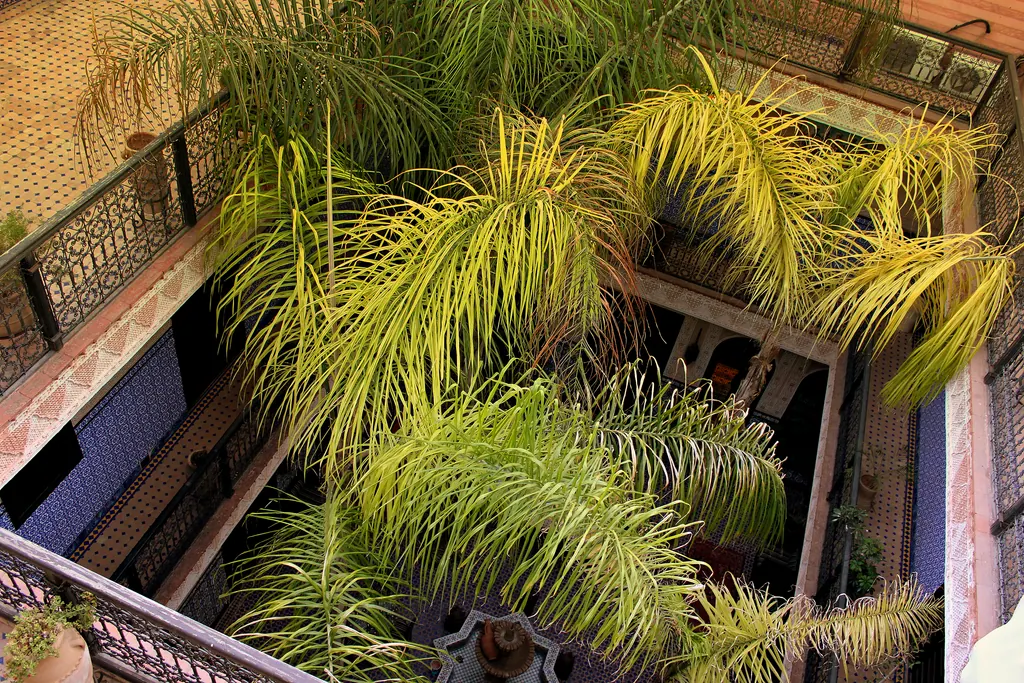
From the alley, there is almost nothing to see. A plain wall, maybe a studded wooden door, a small brass hand of Fatima as a knocker. Step inside, though, and the street noise of the medina drops away. There are orange trees, a tiled fountain, galleries of carved plaster rising two or three floors around an open sky.
That moment of surprise is why so many travelers to Morocco book a riad instead of a hotel. But the word gets used loosely, and listings can make a converted family home look like a palace. Here is what a riad actually is, how it differs from a dar or a guesthouse, and what a night in one is really like.
Where Does the Word Come From?
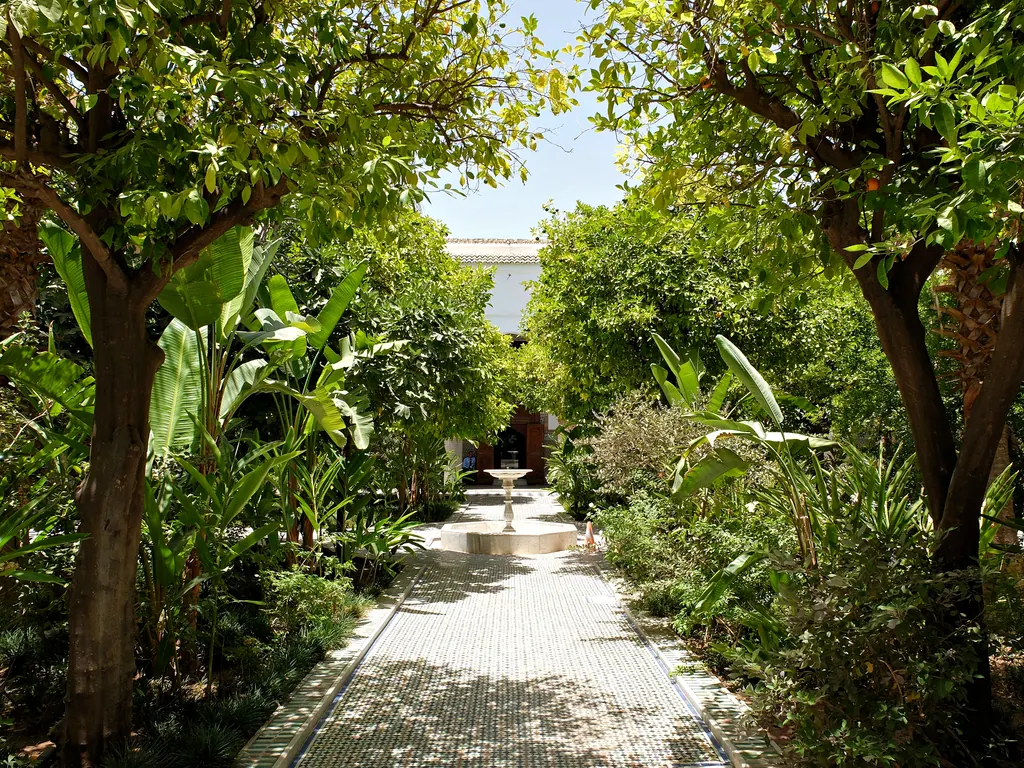
Riad comes from the Arabic riyad, meaning "gardens." Originally it did not describe a house at all, but a particular kind of courtyard garden: a rectangle divided into four planted sections by two crossing paths, usually with a fountain where the paths meet. The idea traces back to Persian garden design and spread with Islamic architecture across North Africa and into Spain. The courtyards of the Alhambra in Granada are close relatives.
In Morocco, the form became especially popular in Marrakech, where the climate and the space inside the old city suited large garden courtyards. The earliest known true riad garden in the country was found in an Almoravid palace in Marrakech from the early 12th century. Over the following centuries, merchants and court officials built homes around their own smaller versions, often planted with orange or lemon trees.
Riad or Dar: Is There a Difference?
Strictly speaking, yes. A riad is a house built around a planted interior garden. A dar, which simply means "house," is built around a paved courtyard, often with a fountain but without the garden beds. Both are inward-facing, with few or no windows on the outside walls and all the rooms opening onto the central space. That design kept families private and kept the interior cool.
In everyday tourism use, the line has blurred. Today almost any traditional courtyard house converted into accommodation is marketed as a riad, whether or not it has a garden. If a real garden matters to you, look at the photos rather than the name.
What Is It Like to Stay in One?
Most riad guesthouses are small, often somewhere between a handful and about 20 rooms, so the feel is closer to a bed and breakfast than a hotel. A typical stay includes:
- Rooms around the courtyard. Rooms open onto the galleries, so you walk past the fountain or the plunge pool on your way to breakfast.
- A rooftop terrace. This is where many guests spend their evenings, with views over the rooftops of the medina, the minarets and, in Marrakech, the Atlas Mountains on a clear day.
- Breakfast included. Usually Moroccan pancakes, bread, jams, eggs, fruit and mint tea, served in the courtyard or on the roof.
- Staff who know the city. Many riads will arrange airport transfers, a guide, a cooking class or dinner in the house, which can be some of the best food of the trip.
- Decor you will not see in a chain hotel. Zellige tilework, carved cedar, tadelakt plaster walls and brass lanterns are typical.
Some larger riads add a small hammam, a spa or a pool. Others are simple family-run houses with a few rooms and a lot of personality.
The Downsides Listings Do Not Mention
A riad is wonderful when you know what you are getting. A few things surprise first-timers:
- Finding it. Riads sit deep inside medina alleys, and cars cannot reach most of them. Many riads send someone to meet you at the nearest road or taxi stand, with a porter and a handcart for the luggage. Accept the offer, at least the first time.
- Sound travels. Because every room faces the same open courtyard, you hear conversations, footsteps and the call to prayer. Light sleepers should bring earplugs.
- Stairs, and often no elevator. Upper-floor rooms usually mean narrow, steep staircases.
- Winter can be chilly. The courtyard is open to the sky, and Marrakech nights in December and January can be cold. Ask whether rooms have heating, not just air conditioning.
- Small rooms, small windows. Rooms facing the courtyard may have little natural light, and some of the best-looking rooms are tiny.
You will also usually pay a small municipal tourist tax per person per night on top of the room rate. In Marrakech it is typically a few dozen dirhams at most (a few dollars in 2026), and children are often exempt.
Where to Find Riads in Morocco
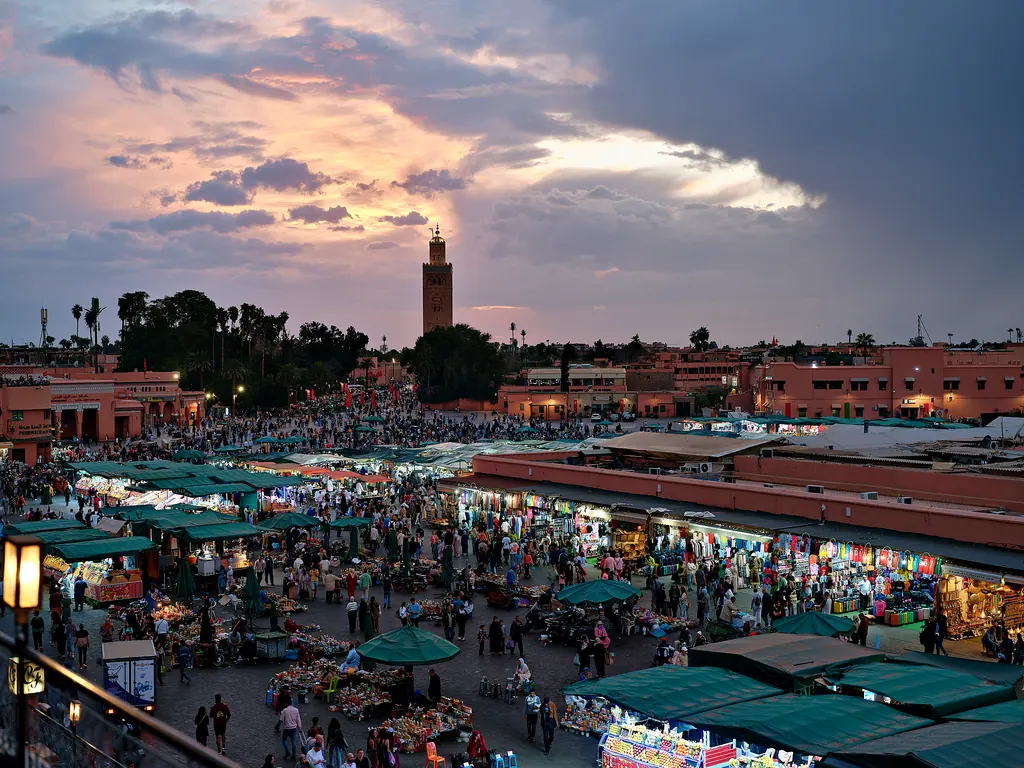
Marrakech has by far the largest number, many of them in the medina within walking distance of Jemaa el-Fnaa square and the souks. Our guide to shopping in Morocco covers what to look for once you are out in those alleys.
Fes has riads in the old medina of Fes el-Bali, one of the largest car-free urban areas in the world. Riads there tend to be taller and narrower, because the city is hilly and densely built.
Essaouira, on the Atlantic coast, has a more relaxed medina with whitewashed riads, sea breezes and a calmer pace.
Chefchaouen, Meknès, Rabat and Tangier also have riad guesthouses, often fewer and more modest, but with less competition for the best ones.
Foreign buyers have restored many of the old houses since the 1990s and 2000s, especially in Marrakech. That has brought money into the medina and kept craftsmen busy, though it has also changed the character of some neighborhoods.
How to Pick the Right Riad
- Check the location on a map. "Five minutes from the square" can mean a five-minute walk through a maze. A riad near a gate or a road the taxis can reach is easier with luggage.
- Read recent reviews for noise, heating and hot water. These matter more than the decor.
- Ask about the room's floor and stairs if anyone in your group has trouble with steps.
- Decide how social you want to be. In a riad with six rooms, you will see the same faces at breakfast every day, which many people love and some do not.
- Look at the courtyard. If you want the full garden experience, choose a house with real plants and trees, not just a paved patio.
If you are drawn to places where the building is part of the trip, you may also like our guides to Japan's ryokans and Spain's paradores. Morocco, though, is the one country where you can sleep in a centuries-old courtyard house in almost any old town. More ideas are on our hotels and accommodation page.
Frequently asked questions
What does riad mean?
Riad comes from the Arabic word for gardens. It originally described a courtyard garden divided into four parts with a central fountain, and today it is used for traditional Moroccan courtyard houses, especially those turned into guesthouses.
What is the difference between a riad and a dar?
A riad is built around a planted interior garden, while a dar is built around a paved courtyard without garden beds. In tourism, both are often simply called riads.
Is it better to stay in a riad or a hotel in Marrakech?
A riad gives you a small, personal stay inside the medina, often with breakfast and a rooftop terrace. A hotel usually offers more space, elevators, quieter rooms and easier car access.
Are riads cold in winter?
They can be. The central courtyard is open to the sky, and Marrakech nights in winter are chilly, so ask whether the rooms have heating.