Step through the gate of an old bazaar and the city outside goes quiet. The light turns amber, the lanes narrow, and every few steps the smell changes: cumin, then leather, then rosewater, then roasting coffee. Someone offers you tea before you have even looked at the carpets.
Across the Middle East and North Africa, the great covered markets are much more than places to shop. Many have traded on the same spot for centuries, and they still work as the commercial heart of their cities, where locals buy gold for a wedding, spices for dinner and fabric for a new robe. Here are seven of the most rewarding to wander, from Istanbul to Muscat, and what makes each one different.
1. The Grand Bazaar, Istanbul
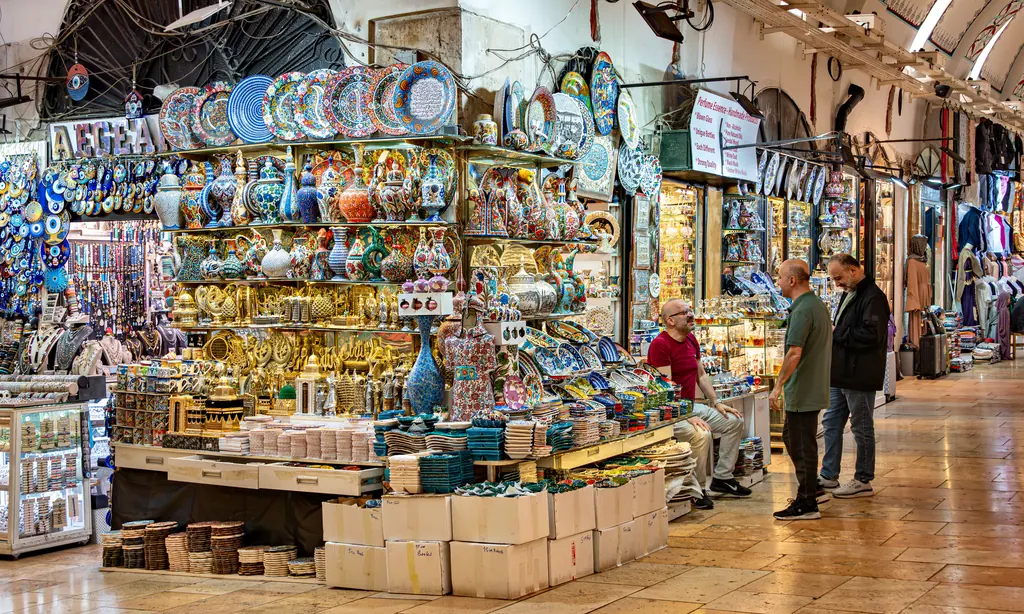
The Grand Bazaar is the one most people picture. It grew around the Cevahir Bedesten, a domed hall for valuables that Sultan Mehmed II built after the Ottoman conquest of Constantinople and completed in 1461. Today it is a city within the city, with around 60 covered streets and several thousand shops (estimates range from about 3,600 to more than 4,000).
The best way to see it is to give up on a plan. Follow the painted vaults past lamp sellers, carpet dealers and jewelers, then look for the old hans, the courtyard workshops tucked behind the main lanes. The bazaar is closed on Sundays and religious holidays, and in 2026 it was open roughly 8:30 a.m. to 7 p.m. the rest of the week. Pair it with the Spice Bazaar near the Golden Horn, a 17th century market famous for Turkish delight and mounds of saffron and sumac.
2. Khan el-Khalili, Cairo
Cairo's great bazaar began in 1382, when an emir named Jaharkas al-Khalili built a caravanserai for traveling merchants in the heart of the medieval city. The district grew around it, and it now sits within Historic Cairo, a UNESCO World Heritage Site since 1979, surrounded by some of the finest Islamic architecture in the world.
Khan el-Khalili is at its best in the evening, when the heat drops, lanterns glow above the lanes and families stroll through. Look for brass and copper work, inlaid wooden boxes, perfume bottles and spices, and take a break at one of the old coffeehouses, where tea and shisha have been served to travelers for generations. If you are planning a wider trip, our guide to the best time to visit Egypt helps you avoid the hottest months.
3. The Souks of Marrakech
Marrakech's souks fill the lanes north of Jemaa el-Fnaa, the great square whose storytellers, musicians and food stalls are recognized by UNESCO as intangible cultural heritage. The whole medina has been a UNESCO World Heritage Site since 1985.
What makes Marrakech special is that many souks are still organized by trade. You can wander from the metalworkers, where lanterns are hammered and punched by hand, to the dyers, where skeins of colored wool hang to dry above the lane, and on to leather, babouche slippers and spices. Getting lost is part of the experience, but it is also easy, so drop a pin on your phone at your riad before setting out. For more on what to buy and how to bargain, see our guide to shopping in Morocco.
4. Souq Waqif, Doha
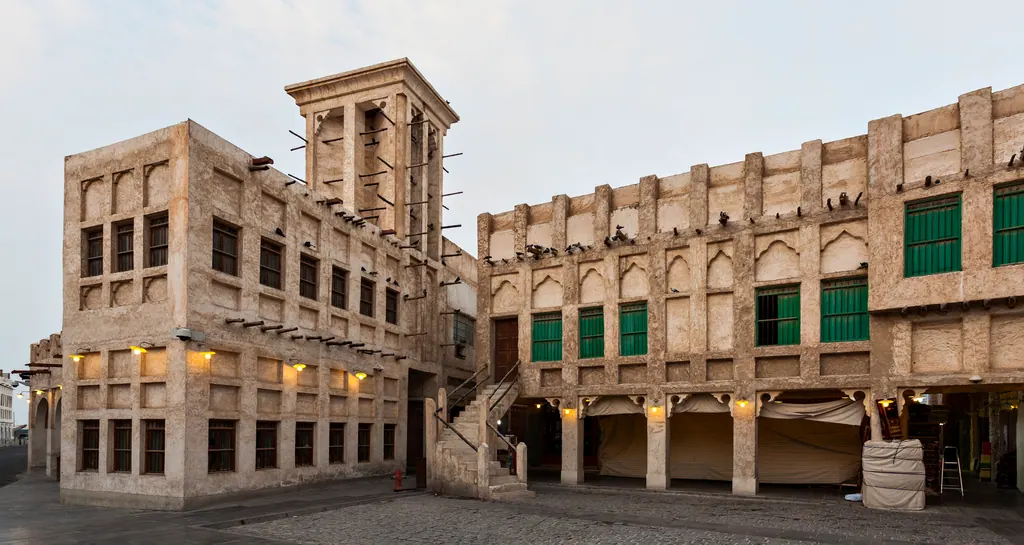
Souq Waqif is a lesson in how to bring an old market back to life. The site has hosted trade for well over a century, but by the early 2000s much of it was run down. Qatar restored the souq between 2006 and 2008, stripping away modern additions and rebuilding with traditional mud and timber, so that today the lanes look much as they would have long before the oil era.
It is a pleasant place to spend an evening. Restaurants spill onto the main walkway, and the side lanes sell spices, textiles, incense and traditional clothing. Don't miss the Falcon Souq, where specialist shops sell hoods, perches and the birds themselves, a reminder of how central falconry still is to Gulf culture.
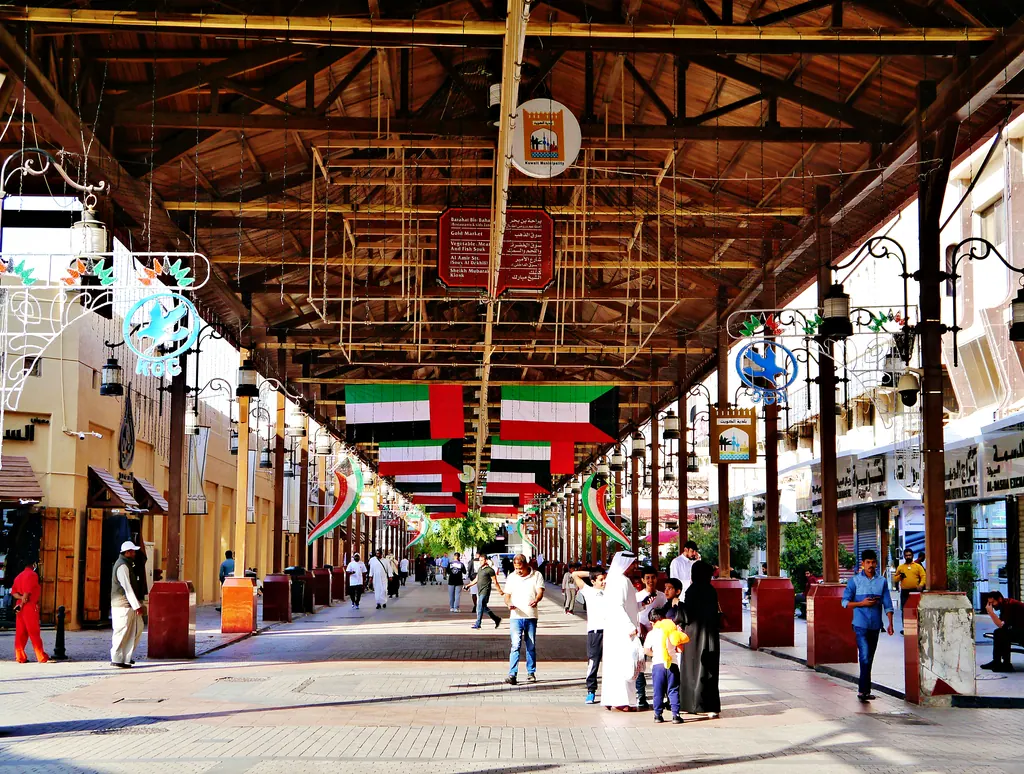
5. Souq Al-Mubarakiya, Kuwait City
Kuwait's most famous market takes its name from Sheikh Mubarak Al-Sabah, who ruled from 1896 to 1915. In 1897 he built a small two-story kiosk in the middle of the souq and used it as his office, where residents could come and raise problems directly with the ruler. The restored kiosk is now a small museum.
The souq survived the oil boom that rebuilt the rest of Kuwait City, was damaged during the Iraqi invasion in 1990 and restored afterward. A fire on March 31, 2022, destroyed part of the market, and reconstruction of the damaged section was still under way in 2025, while the rest of the souq kept trading. Come hungry: the covered lanes are lined with stalls selling dates, honey, spices and dried fruit, and simple restaurants serve grilled fish and Kuwaiti rice dishes. Shops also sell oud, perfume, carpets and traditional dishdashas.
6. The Gold Souk, Dubai
Dubai's Gold Souk, in the old district of Deira across the creek from the skyscrapers, is a different kind of bazaar. Hundreds of jewelers line a covered pedestrian street, their windows stacked with necklaces, bangles and rings in yellow, white and rose gold.
Even if you are not buying, it is a spectacle. If you are, know how pricing works: gold is sold by weight at the day's rate for its purity (usually 18, 21 or 22 karat), plus a making charge for the craftsmanship. The making charge is where there is room to negotiate. A short abra boat ride across Dubai Creek takes you to the textile souk in Bur Dubai, and the spice souk is a few minutes' walk away in Deira.
7. Mutrah Souq, Muscat
Mutrah Souq sits behind the corniche in Muscat's old port district, facing the harbor where dhows once unloaded goods from India and East Africa. It dates back to the 19th century and is one of the oldest markets in Oman, with a maze of lanes under a timber roof.
This is the place to buy frankincense, the aromatic resin that made southern Arabia rich in ancient times and is still burned in Omani homes every day. You will also find silver khanjar daggers, embroidered caps, pashminas and perfumes. The atmosphere is calmer than in Marrakech or Cairo, and the walk along the corniche at sunset makes a fine end to a visit.
How to Shop a Bazaar Like a Local
A few habits make any bazaar more enjoyable:
- Bargain politely, where it is expected. Haggling is normal for carpets, crafts and souvenirs in Istanbul, Cairo and Marrakech, less so for food, and prices in the Gulf souqs are often closer to fixed. Decide what something is worth to you before you start, and keep it friendly.
- Accept the tea. In many bazaars a glass of tea is simple hospitality, not an obligation to buy.
- Check opening days. The Grand Bazaar closes on Sundays, and many souqs in the Gulf close for part of Friday for prayers and reopen in the late afternoon. Ramadan changes hours everywhere, often with markets busiest late at night.
- Carry small notes. Cash in the local currency speeds up small purchases, though larger shops take cards.
- Dress respectfully. Covering shoulders and knees is wise in all of these markets, and especially in Kuwait, Qatar and Oman.
- Think about customs at home. Antiques, certain animal products and some foods face restrictions when you bring them back to the United States, so keep receipts and declare what you buy.
Before you travel, check the U.S. State Department advisory for each country, since conditions in the region can change quickly. For more market ideas closer to home, our guide to Europe's great food markets is a good next read, and our shopping page collects everything we have written on the subject.
Frequently asked questions
What is the biggest bazaar in the Middle East?
Istanbul's Grand Bazaar is usually described as one of the largest and oldest covered markets in the world, with around 60 streets and several thousand shops.
Is the Grand Bazaar open on Sundays?
No. The Grand Bazaar is closed on Sundays and on religious holidays. In 2026 it was open roughly 8:30 a.m. to 7 p.m. Monday through Saturday.
Should you bargain in Middle Eastern bazaars?
Haggling is expected for carpets, crafts and souvenirs in places like Istanbul, Cairo and Marrakech. Prices in Gulf souqs are often closer to fixed, and food is rarely bargained over.
What should I buy at Souq Al-Mubarakiya in Kuwait?
The souq is known for dates, honey, spices, oud and perfume, along with carpets and traditional clothing. It is also a good place for a simple Kuwaiti meal.
- Istanbul Tourism Portal: Grand Bazaar
- UNESCO World Heritage Centre: Historic Cairo
- UNESCO World Heritage Centre: Medina of Marrakesh
- Kuwait Times: From Seif to Safat, markets that shaped old Kuwait
- MDPI Sustainability: Form and Function in Two Traditional Markets of the Middle East, Souq Mutrah and Souq Waqif