Somewhere south of the Río Colorado, Argentina changes character. The vineyards and cattle ranches give way to a dry, windswept steppe, the towns grow small and far apart, and the Andes turn into a wall of granite spires and ice fields along the western horizon. This is Patagonia, and it is big enough to swallow several American states.
Its distances are also its biggest challenge. You cannot see Argentine Patagonia in one trip, and you should not try. What you can do is pick two or three places that match what you want: glaciers, hiking, wildlife, lakes or the end of the road. These are the six we would build a trip around.
1. Perito Moreno Glacier
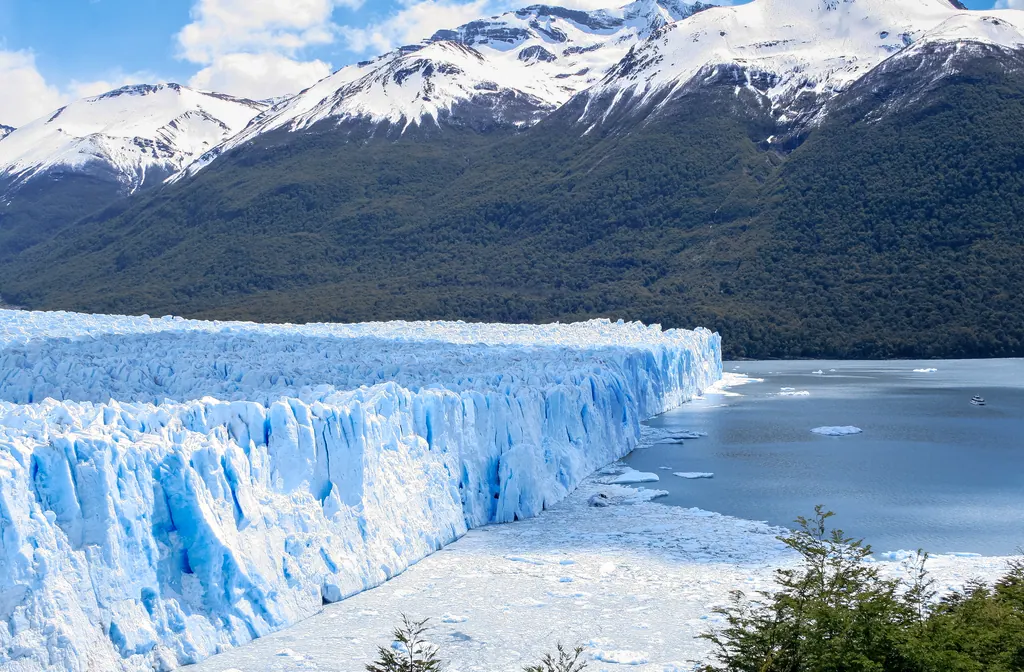
If you see only one thing in Patagonia, it is usually this. The Perito Moreno Glacier flows out of the Southern Patagonian Ice Field into Lago Argentino inside Los Glaciares National Park, a UNESCO World Heritage Site since 1981. Its front is about 3 miles (5 km) wide and rises around 200 feet (60 m) above the water.
What makes Perito Moreno special is how close you can get. A network of walkways on the Magallanes Peninsula faces the ice wall directly, so you can stand across the channel and wait for house-sized blocks of ice to crack off and crash into the lake. The sound arrives before you see the splash. Boat trips run close to the face, and guided treks on the ice itself are possible with licensed operators.
The glacier is a day trip from El Calafate, the town with the region's main airport and plenty of hotels. Flights from Buenos Aires take about three hours.
2. El Chaltén and Mount Fitz Roy
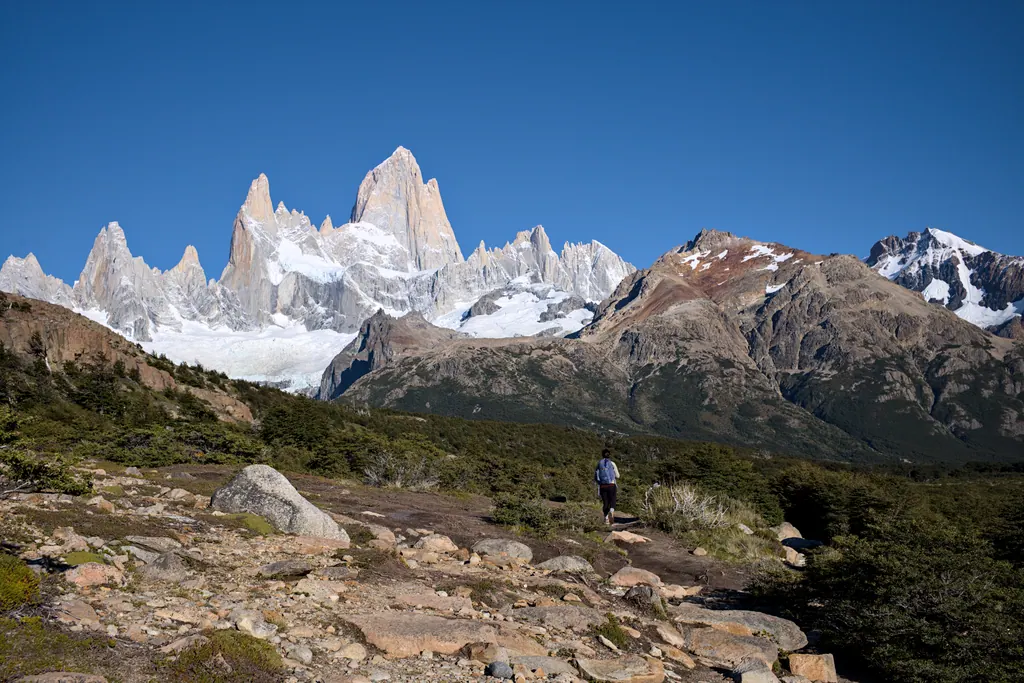
About three hours' drive north of El Calafate, at the northern end of the same national park, sits El Chaltén, a small town that calls itself Argentina's trekking capital. Behind it rises Mount Fitz Roy, a granite tower of roughly 11,000 feet, flanked by a row of sharp spires including Cerro Torre.
The best part is that many trails start right in town and need no permit or guide. The classic is the hike to Laguna de los Tres, a glacial lake at the foot of Fitz Roy. According to Argentina's official Ruta Natural site, it is about 15.5 miles (25 km) round trip and takes 8 to 9 hours, with a steep final climb. Shorter walks lead to viewpoints over the valley and to Laguna Torre, below Cerro Torre.
The weather decides everything here. Fitz Roy can hide in cloud for days, then appear in clear blue sky in the morning. Give yourself at least three nights so you have a chance of good conditions.
3. Península Valdés
On the Atlantic coast, roughly 900 miles (1,400 km) south of Buenos Aires, Patagonia is not about mountains but about animals. Península Valdés, a UNESCO World Heritage Site since 1999, is one of the most important breeding grounds for the southern right whale. According to UNESCO, more than 1,500 whales visit the area each year.
Timing is crucial:
| Wildlife | When to see it |
|---|---|
| Southern right whales | June to mid-December, best in October |
| Magellanic penguins | Mid-September to March |
| Orcas hunting on the beach at Punta Norte | Mainly March to May |
| Elephant seals and sea lions | Much of the year |
Whale-watching boats leave from the village of Puerto Pirámides. The closest town with an airport is Puerto Madryn, with another airport in Trelew. South of the peninsula, Punta Tombo is home to one of the largest continental colonies of Magellanic penguins in the world, with hundreds of thousands of birds nesting there between September and April.
4. Bariloche and the Lake District
In northern Patagonia, the landscape turns green. San Carlos de Bariloche sits on the shore of Lago Nahuel Huapi, surrounded by forest, lakes and snowy peaks, and it feels more like the Alps than the steppe. It is the gateway to Nahuel Huapi National Park, Argentina's oldest national park, formally created in 1934.
Bariloche is the easiest part of Patagonia to visit. In summer you can drive the scenic Circuito Chico loop, hike, kayak, take boat trips on the lake and ride a chairlift to views over the water. In winter it turns into one of South America's best-known ski areas. The town also has a long tradition of chocolate making, which you will notice on the main street.
5. Ushuaia and Tierra del Fuego
At the very bottom of the map, Ushuaia sits between the mountains and the Beagle Channel on the island of Tierra del Fuego. It markets itself as the southernmost city in the world, and it is the main departure port for cruises to Antarctica.
Even without a ship ticket, there is plenty to do. Boat trips on the Beagle Channel pass islands crowded with sea lions and seabirds. Tierra del Fuego National Park, just west of town, has coastal trails through beech forest, and the narrow-gauge End of the World Train runs about 4 miles (7 km) through the forest to the edge of the park. If you are tempted to go farther south, read about the animals you can see in Antarctica.
6. Ruta 40 Through the Steppe
Between the highlights lies the landscape most people only see from a plane window. Ruta 40 runs the length of Argentina along the Andes, more than 3,000 miles in total, and its Patagonian stretch is one of the great road trips of South America: long, straight, empty roads, guanacos, rheas, estancias and very few gas stations.
Driving part of it, for example between Bariloche and El Chaltén, is a serious undertaking. Distances are long, wind can be fierce, some sections may still be gravel, and services are sparse. Fill up whenever you can and check road conditions before you set out.
When to Go and How to Plan
The southern summer, roughly November to March, is the main season for Patagonia. Days are long, trails and boat trips run, and the weather is at its mildest, though wind and sudden changes are normal any time of year. December to February is the busiest and most expensive time. November and March are quieter and still good, and spring (October to November) is the best time for whales and penguins on the coast.
A few planning tips:
- Fly, then drive. Domestic flights connect Buenos Aires with El Calafate, Bariloche, Ushuaia, Puerto Madryn and Trelew, and they save days of travel.
- Choose a theme. A glaciers and hiking trip (El Calafate and El Chaltén) and a wildlife trip (Península Valdés) are very different holidays, hundreds of miles apart.
- Pack for four seasons. Windproof layers, a warm hat and sunscreen all earn their place in the same day.
- Entry is simple. As of November 20, 2026, U.S. citizens do not need a visa for tourist stays in Argentina of up to 90 days, according to the U.S. State Department, which rates Argentina at Level 1, its lowest advisory level.
Patagonia continues across the border in Chile, where Torres del Paine can be combined with El Calafate on a longer trip. For more ideas from the region, see our guides to the Atacama Desert and Angel Falls in Venezuela, or browse all of South America.
Frequently asked questions
What is the best time to visit Argentine Patagonia?
The southern summer, roughly November to March, is the main season, with long days and the mildest weather. October and November are best for whales and penguins on the Atlantic coast.
How many days do you need in Patagonia?
Plan at least a week for one region, such as El Calafate and El Chaltén. Distances are long, so seeing several regions usually means two weeks or more and domestic flights.
Do Americans need a visa for Argentina?
As of November 20, 2026, U.S. citizens do not need a visa for tourist stays of up to 90 days, according to the U.S. State Department.