In the far north of Chile, between the Pacific coast and the Andes, the Atacama Desert stretches across a high plateau so dry that some weather stations have gone years without recording rain. It is often described as the driest nonpolar desert on Earth. That dryness is exactly what makes it worth the long trip south: salt flats with flamingos, steaming geysers at dawn, lagoons the color of a swimming pool under volcanoes, and night skies clear enough that some of the world's largest telescopes were built nearby.
Most travelers base themselves in San Pedro de Atacama, a small adobe town at about 7,900 feet (2,400 m). Everything below is a day trip from there.
Moon Valley at Sunset
The Valle de la Luna (Valley of the Moon) is about 8 miles (13 km) west of town, inside the Los Flamencos National Reserve. Wind and the occasional flash flood have carved the Cordillera de la Sal into ridges, salt caves and sand dunes, and the light turns everything orange and pink in the last hour before sunset.
The classic outing is a late afternoon visit ending at a viewpoint such as the Duna Mayor, a large dune with views over the valley. You can enter in your own vehicle or with an authorized tour. Tickets for foreign visitors cost CLP 10,800 (about $11 in 2026) and are sold online through the official site, with a limited number of entries per day in busy months.
Flamingos on the Salt Flat
South of San Pedro lies the Salar de Atacama, Chile's largest salt flat. Its crust looks like a field of broken white rock, but in the Soncor sector, at Laguna Chaxa, shallow pools attract three species of flamingo: Chilean, Andean and James's flamingos. Early morning and late afternoon tend to be calm, so the water mirrors the birds and the mountains behind them.
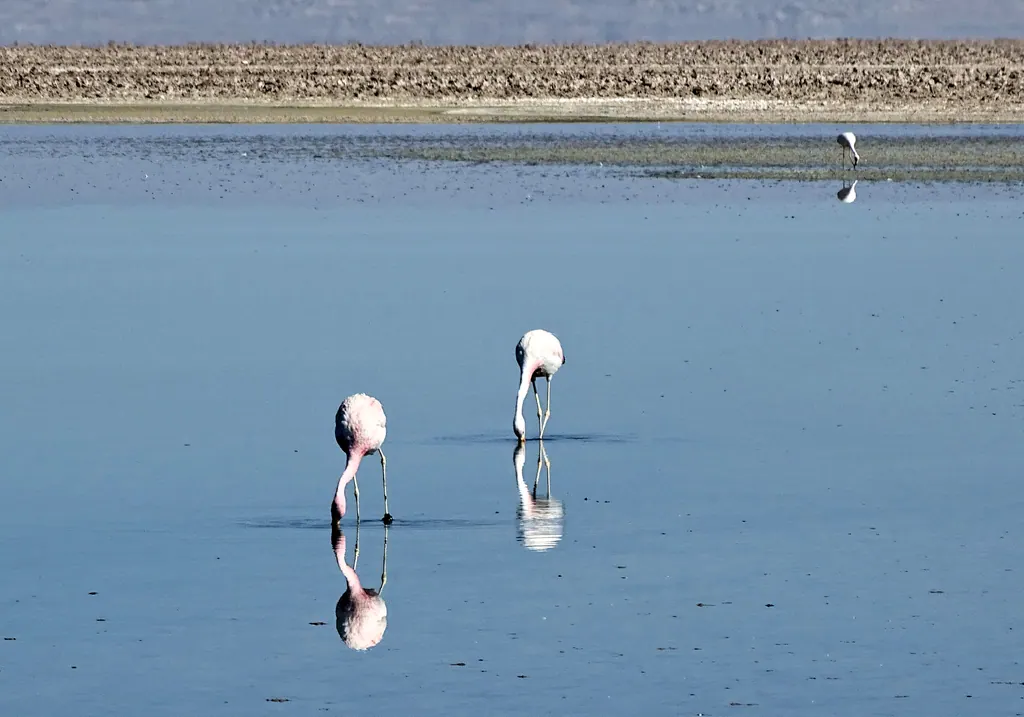
Closer to town, Laguna Cejar is a salt lagoon so dense that swimmers float without effort, similar to the Dead Sea. Swimming rules and access change from season to season, so check before you go and bring fresh water to rinse off.
High Lagoons Under the Volcanoes
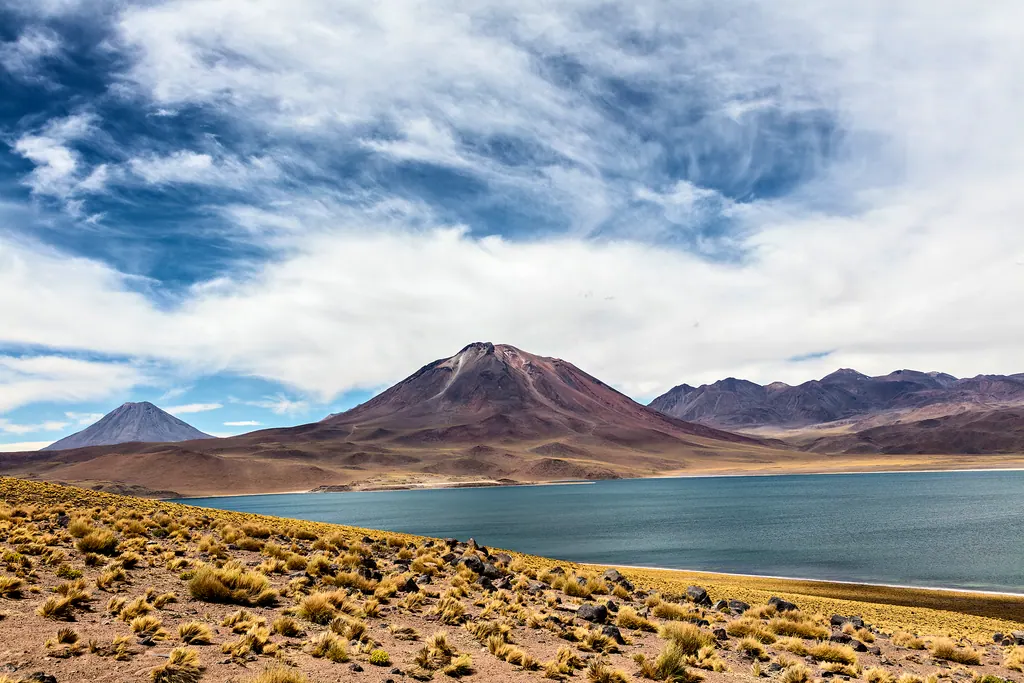
The drive south and east climbs to the Lagunas Altiplánicas, Miscanti and Miñiques, at around 13,500 feet (4,100 m). Deep blue water sits beneath the Miscanti and Miñiques volcanoes, with yellow bunch grass around the shore and vicuñas, the wild relatives of the llama, often grazing nearby.
Many tours combine the lagoons with the Piedras Rojas, red rock formations beside a salt lake farther along the same road. It makes for a long day at altitude, so it works best after you have spent a couple of nights in San Pedro.
Geysers at First Light
El Tatio sits at about 14,170 feet (4,320 m), north of San Pedro. With more than 80 active geysers, it is the largest geyser field in the Southern Hemisphere. The steam columns are at their tallest just after sunrise, when the cold air makes them most visible, which is why tours leave town in the dark, often around 4:30 to 5 a.m.
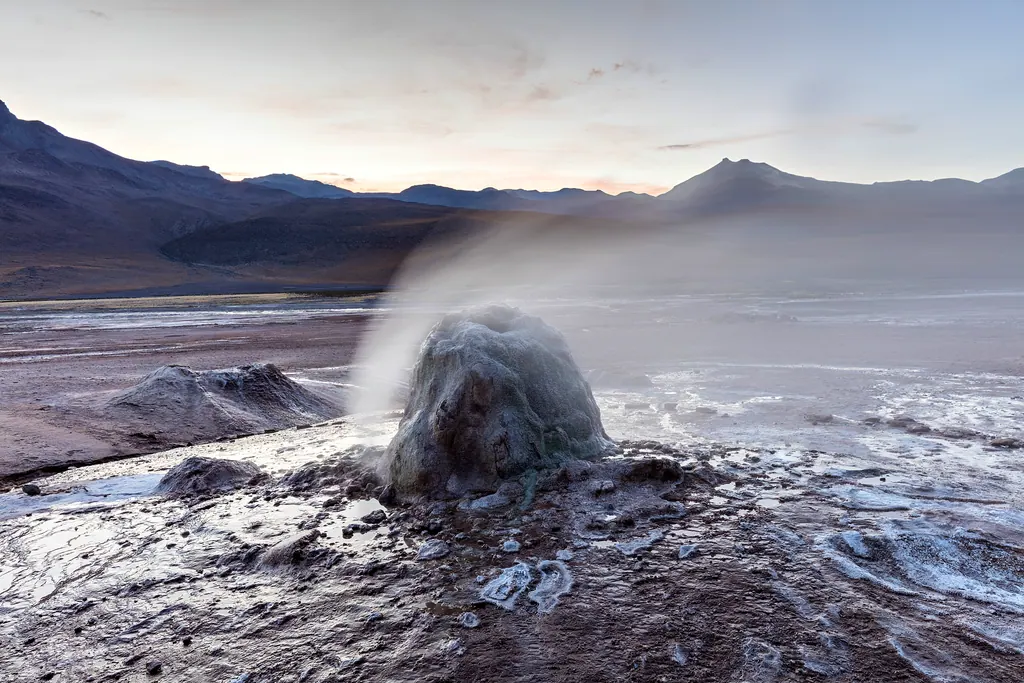
Temperatures at that hour are well below freezing, so bring a hat, gloves and a warm jacket even in summer. Stay on the marked paths: the ground around the vents is thin, and the water is close to boiling. Some tours stop at the small hot pool on the site or at the village of Machuca on the way back.
Why the Night Sky Is So Clear
The same conditions that keep the Atacama dry give it some of the clearest skies on the planet: high altitude, very little humidity, almost no cloud and little light pollution away from town. That is why international observatories are spread across northern Chile, including ALMA, a radio telescope array on the Chajnantor Plateau east of San Pedro.
For visitors, the easiest way to see it is a night stargazing tour from town. Small operators drive guests a few miles out into the desert and set up telescopes, pointing out the Milky Way, the Magellanic Clouds and southern constellations that never rise over the continental U.S. Plan around the moon: the week around a new moon gives the darkest skies, while a full moon washes out the fainter stars. ALMA's public visits have been limited in 2026, so check its website before planning a trip around it.
When to Go
The Atacama can be visited year round, but each season has trade-offs:
- September to November and March to May bring mild days, often in the 70s°F (21 to 26°C), and cold, clear nights. These are the easiest months for most travelers.
- December to February is summer and the busiest period, especially around Christmas and New Year. In January and February, the so-called Bolivian winter can bring storms to the high Andes, and roads to El Tatio or the high lagoons sometimes close for a day or two.
- June to August is winter. Days are still often sunny, but nights in San Pedro can drop below freezing and the high-altitude excursions get very cold.
Getting There and Getting Around
From the U.S., fly to Santiago (nonstop flights run from several hubs, including Miami, Dallas, Houston, Atlanta and New York). From Santiago, domestic flights to Calama take about two hours. San Pedro is then about 62 miles (100 km) away by road, roughly 90 minutes by shuttle or rental car.
U.S. citizens do not need a visa for tourist stays of up to 90 days in Chile. The State Department rates Chile at Level 2: Exercise Increased Caution, mainly because of crime and occasional civil unrest in cities. San Pedro itself is a small, walkable tourist town, though normal precautions with valuables still apply.
Many visitors book day tours from San Pedro, which handle the early starts and the high-altitude driving. A rental car gives more freedom for the Valle de la Luna and the salt flat, but a 4x4 or high-clearance vehicle is better for the rougher roads.
Altitude Comes First
Altitude is the main thing to plan around. San Pedro sits higher than Denver, and the geysers and lagoons are higher than most peaks in the Rockies. Spend at least one or two days on low-key outings near town before going to El Tatio or the high lagoons, drink plenty of water, go easy on alcohol, and talk to your doctor before the trip if you have heart or lung conditions. Headaches and shortness of breath are common at first; if symptoms get worse, go down.
The Atacama pairs well with other far-south adventures. Browse more trips in South America, more landscapes in our Nature guides, or go even farther south with our look at the animals of Antarctica.
Frequently asked questions
Where do you stay when visiting the Atacama Desert?
Most travelers stay in San Pedro de Atacama, a small town at about 7,900 feet (2,400 m). Tours to Valle de la Luna, the salt flat, the high lagoons and the El Tatio geysers leave from there.
What is the best time to visit the Atacama Desert?
Spring (September to November) and fall (March to May) usually bring mild days and clear nights. January and February can bring storms that close high roads, and winter nights from June to August are very cold.
How high is the El Tatio geyser field?
El Tatio sits at about 14,170 feet (4,320 m). It has more than 80 active geysers and is the largest geyser field in the Southern Hemisphere.
Do Americans need a visa for Chile?
No. U.S. citizens can visit Chile as tourists for up to 90 days without a visa.
How do you get to San Pedro de Atacama?
Fly to Santiago, then take a domestic flight of about two hours to Calama. San Pedro is about 62 miles (100 km) from Calama, roughly 90 minutes by shuttle or rental car.