
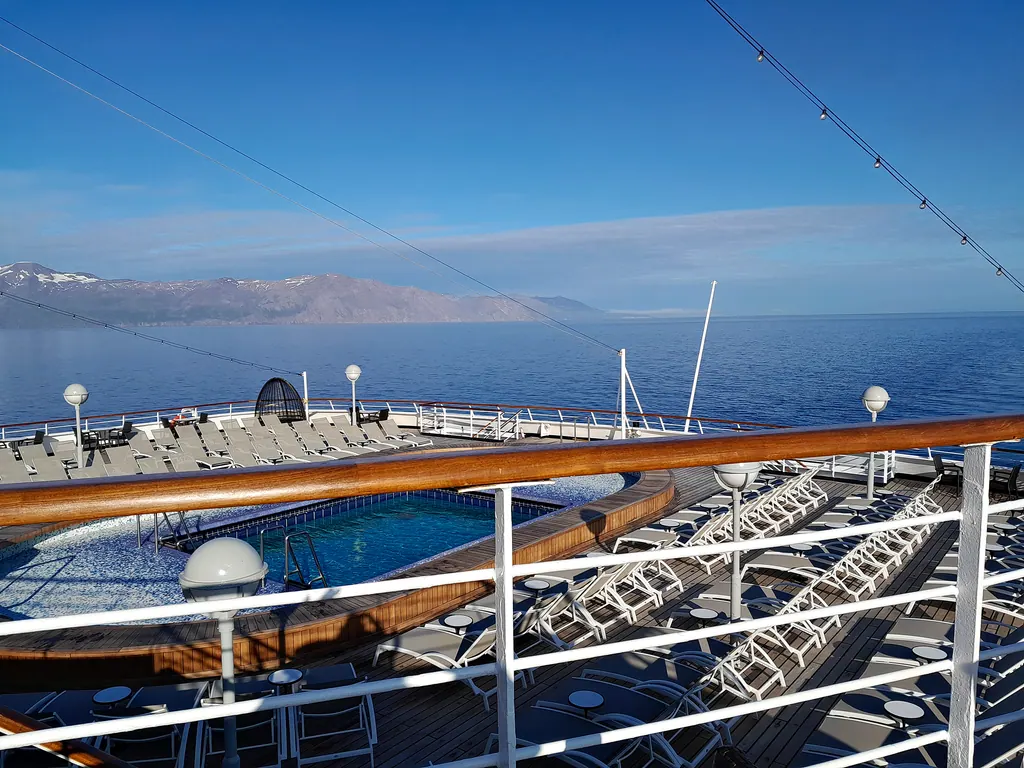
The first evening at sea usually tells you. The buffet smells a little too strong, the horizon outside the dining room window tilts and settles, tilts and settles, and somebody at the next table quietly puts down their fork. Seasickness is one of the most common complaints on cruise ships, and the CDC estimates that it affects up to 25% of cruise travelers despite modern stabilizers.
It is also one of the most preventable. Most of what helps is decided before you board: which route you book, where your cabin is, and what you pack in your toiletry bag. Below we go through what actually works according to medical guidance, what is mostly hope, and what to do if the ship starts rolling anyway.
Why Does a Cruise Ship Make You Sick?
Motion sickness is a mismatch between your senses. Your inner ear registers that the ship is moving, while your eyes, fixed on a cabin wall or a menu, report that everything is still. The brain reads the conflict as a problem and responds with the familiar chain of symptoms: yawning, a feeling of warmth, cold sweat, dizziness, nausea and finally vomiting.
That explains why some situations are worse than others. An inside cabin with no view, reading in bed while the ship pitches, or watching a screen during rough weather all widen the gap between what you feel and what you see.
Who Is Most Likely to Get Seasick?
Almost anyone can get motion sick if the movement is strong enough, but some people are more prone than others. According to the CDC Yellow Book:
- Children under 2 rarely get motion sick. Susceptibility peaks between the ages of 7 and 12 and then usually declines through adulthood.
- Women are somewhat more susceptible than men, though age matters more.
- People with a history of migraines, vertigo or other inner ear problems are more likely to be affected.
- A large part of the difference between people is genetic, so if your parents got seasick, take precautions.
The good news is that the body adapts. Most passengers feel better after the first day or two at sea, which is why the first night and the first rough stretch are the ones to plan for.
Choose a Calmer Itinerary
The single biggest factor is the water you sail on. Some routes are known for gentle seas, others for swell that even veteran crew respect.
| Usually calmer | Often rough |
|---|---|
| River cruises in Europe and on the Mississippi | Drake Passage between South America and Antarctica |
| Alaska's Inside Passage, which is sheltered by islands | Transatlantic crossings, especially in spring and fall |
| Eastern and Western Caribbean outside hurricane season | Bay of Biscay and the North Sea |
| Short Mediterranean itineraries in summer | Open Pacific legs, such as Hawaii round trips from the West Coast |
If you are unsure how you will react, start with a short, sheltered sailing before booking a long crossing. Our guide to the best time to cruise Alaska explains why the Inside Passage is a good first cruise, and a repositioning cruise is cheap for a reason: many of them cross open ocean in shoulder season.

Pick the Right Ship and Cabin
Large modern ships have stabilizers that dampen the side to side roll, and their size alone makes them steadier than small expedition vessels. They still move, though, especially when they pitch forward and back into a head sea.
Where you sleep matters more than many people think:
- Low and in the middle. The center of the ship moves least. A cabin on a lower deck near midship feels far steadier than one high up at the bow or the stern. The CDC specifically advises avoiding the bow, where motion is greatest.
- A window or balcony helps. Being able to see the horizon lets your eyes confirm what your inner ear feels. An inside cabin is fine for sleeping, but spend your waking hours where you can look out.
- Avoid the highest decks in rough weather. Pool decks and top-floor lounges sway the most.
What to Do on Board
The CDC lists several behavioral countermeasures. None of them works as well as medication on its own, but together they make a real difference, and they have no side effects.
- Look at the horizon. Go out on deck or sit by a window and fix your eyes on a distant, stable point.
- Stop reading and scrolling. Visual tasks are among the strongest triggers. Switch to music or a podcast.
- Keep your head still and lie down if needed. Lying on your back reduces head movements, which helps more than posture itself.
- Get fresh air on your face. A breeze and pleasant scents are useful distractions.
- Try controlled breathing. Breathing slowly at your normal resting rate has been shown in lab trials to be about half as effective as anti-nausea drugs.
- Go easy on alcohol and get enough sleep. Both alcohol and sleep deprivation make motion sickness worse, and so does nicotine.
Eat light, plain meals rather than skipping food completely, and sip water if you start feeling queasy.
Seasickness Medicine: What Works
Medication works best when you take it before symptoms start. Once nausea sets in, your stomach slows down and pills are absorbed poorly. Talk to your doctor before the trip, and consider a test dose at home so you know how drowsy it makes you.
| Medicine | Example U.S. brand | How you get it | Take it | Lasts about |
|---|---|---|---|---|
| Meclizine | Bonine, Dramamine Less Drowsy | Over the counter | 2 hours before | 8-24 hours |
| Dimenhydrinate | Dramamine (original) | Over the counter | 2 hours before | 8 hours |
| Scopolamine patch | Transderm Scop | Prescription | 6-8 hours before | 72 hours |
| Promethazine | Phenergan | Prescription | 2 hours before | 15 hours |
Source: CDC Yellow Book 2026, Table 7.6.2. Doses and suitability vary, so follow your doctor's advice.
For a cruise, the CDC's general guidance for adults is meclizine or dimenhydrinate for mild motion and the scopolamine patch for longer exposure to moderate or rough seas. A few points worth knowing:
- The patch goes behind the ear and should never be cut to adjust the dose. Common side effects are dry mouth, dry eyes and drowsiness. It is not suitable for people with glaucoma or a risk of urinary retention, and it should not be used by children.
- Drowsiness is the main side effect of almost all of these medicines. Scopolamine is slightly less sedating than meclizine and dimenhydrinate, and promethazine is the most sedating.
- Non-drowsy allergy pills do not help. Cetirizine, loratadine and fexofenadine are designed not to reach the brain, which is exactly where seasickness medicine has to act.
- Ondansetron is not a seasickness drug. The CDC notes that this strong anti-nausea medicine does not work against motion sickness.
Do Ginger and Wristbands Work?
Ginger candy, ginger ale and acupressure wristbands are sold in every cruise port, and many passengers swear by them. The evidence is weaker. The CDC describes the support for ginger and other supplements as weak and contradictory, and in lab trials acupressure bands performed no better than placebo.
That does not mean they are useless. Placebo effects can be strong, and if a wristband makes you feel better, it does no harm. Just do not rely on it alone for a winter crossing.
Traveling With Kids
Children between about 7 and 12 are the most susceptible age group. The CDC recommends trying the behavioral tricks first: a window seat, fresh air, no tablets during rough patches. Children's versions of dimenhydrinate exist, but give medicine only after talking to your pediatrician, and try a dose at home first, since some kids become agitated rather than sleepy. Scopolamine patches should not be used on children.
When the Ship Stops but You Keep Rocking
Many passengers feel a gentle rocking sensation for a few hours after they step ashore. It has a name, mal de debarquement, and it is normal. It rarely comes with nausea and usually fades within hours. In very rare cases it lasts for weeks, and then it is worth seeing a specialist in inner ear disorders.
If seasickness hits hard during the cruise, the ship's medical center can give injections that work when pills no longer stay down. Expect to pay for the visit, and check that your policy covers care at sea before you sail. Our guide to travel insurance for a cruise explains what to look for.
A Simple Plan for Your First Cruise
Book a sheltered route, ask for a midship cabin on a low deck, and pack an over-the-counter medicine you have already tested at home. If you know you are prone to motion sickness or are crossing open ocean, ask your doctor about a scopolamine prescription well before departure. Then spend the first afternoon on deck with your eyes on the horizon. For more health advice before you travel, browse our Health & Vaccinations guides.
Frequently asked questions
Where is the best cabin on a cruise ship to avoid seasickness?
A cabin on a lower deck near the middle of the ship moves the least. Avoid the bow, where motion is greatest, and spend waking hours where you can see the horizon.
When should I put on a scopolamine patch?
According to the CDC, the prescription patch needs 6-8 hours to start working and lasts about 72 hours, so apply it behind the ear well before the ship sails.
Do seasickness wristbands work?
In lab trials, acupressure bands performed no better than placebo. They are harmless, but do not rely on them alone for a rough crossing.
Can non-drowsy allergy pills prevent seasickness?
No. Cetirizine, loratadine and fexofenadine do not reach the brain, so the CDC notes they are not effective against motion sickness.
How long does seasickness last on a cruise?
Most people adapt within the first day or two at sea. A mild rocking feeling after you disembark is normal and usually fades within hours.