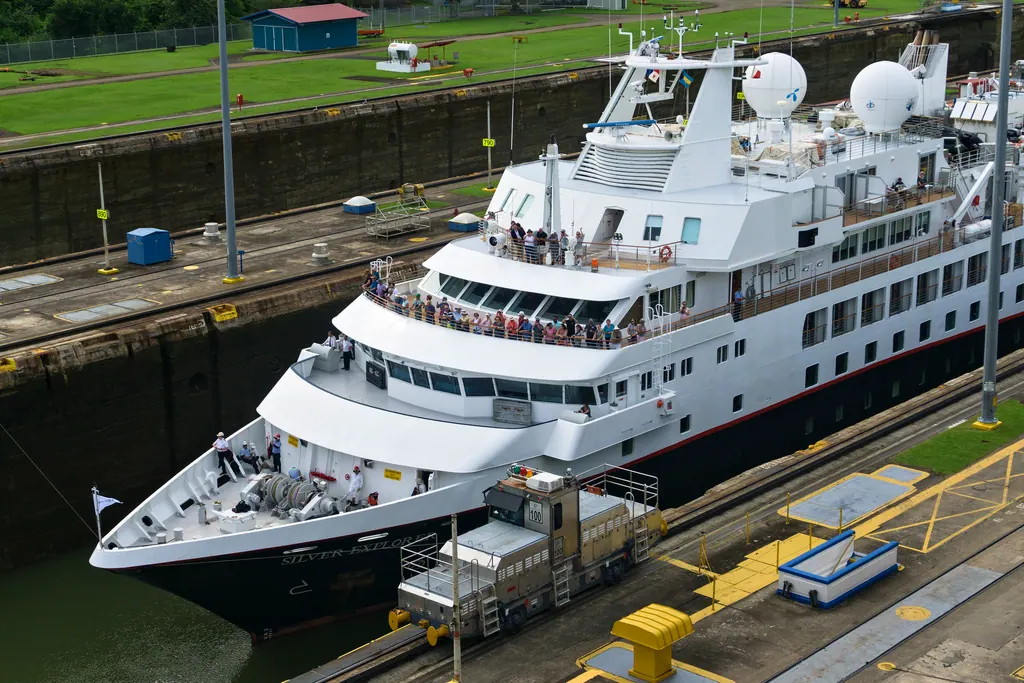
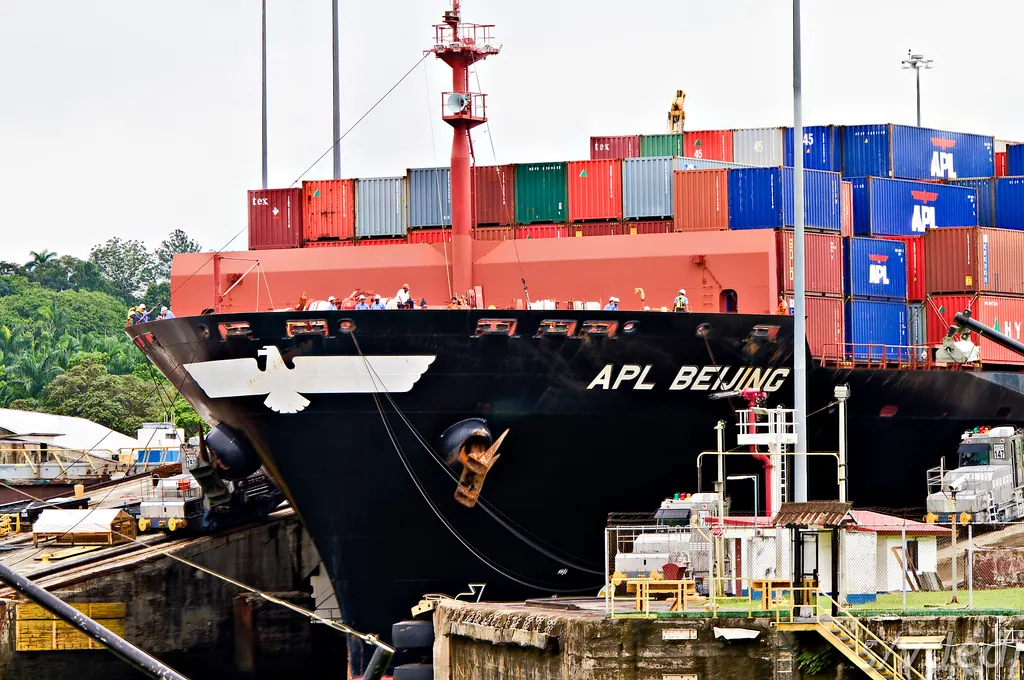
At first light, a cruise ship slides into a concrete chamber barely wider than its own hull. Small electric locomotives on rails along the lock walls take up the slack on the steel cables, the gates close behind the stern, and for the next few minutes the only thing moving is the water. Then the ship starts to rise.
That moment is why people book a Panama Canal cruise, and it is also where the decisions start. Some itineraries cross from ocean to ocean, others only enter the canal and turn back, and the ship you choose decides which locks you will actually see. Here is how the different trips work, how long they take and when the season runs.
How the Panama Canal Works
The canal runs about 50 miles (80 kilometers) across the Isthmus of Panama between the Caribbean side, near Colón, and the Pacific side at Panama City. It opened on August 15, 1914, and has been run by Panama since December 31, 1999. Today the Panama Canal Authority says 13,000 to 14,000 ships pass through each year.
The canal is not at sea level. Locks lift ships about 85 feet (26 meters) to Gatun Lake, a huge artificial lake created by damming the Chagres River, and lower them again on the other side. There are two systems:
- The original locks from 1914: Gatun on the Caribbean side and Pedro Miguel and Miraflores on the Pacific side. Here, ships are guided by electric locomotives nicknamed "mules" that run on tracks along the lock walls. The chambers are 1,000 feet (304.8 meters) long and 110 feet (33.5 meters) wide, and the largest ships allowed are about 106 feet (32.3 meters) wide.
- The expanded locks, opened on June 26, 2016: Agua Clara on the Caribbean side and Cocolí on the Pacific side. They take much larger ships, which are guided by tugboats instead of mules. The first passenger ship through them was the Disney Wonder in April 2017.
For a cruise passenger this is not a technical detail. Many of today's biggest ships are too wide for the original locks, so they use the expanded ones. If you want to see the mules at work and the historic Miraflores and Gatun locks up close, check which locks your ship is scheduled to use before you book, and favor midsize ships that fit the old chambers.
Full Transit or Partial Transit?
This is the biggest choice, and the names say it.
A full transit takes you all the way through, from the Atlantic to the Pacific or the other way. These cruises are one-way, usually between Florida (Fort Lauderdale or Miami) and the West Coast (Los Angeles, San Diego or San Francisco), and sometimes as far as Vancouver. They often last around two weeks, with stops in the Caribbean, Colombia and Central America on the way, such as Cartagena or San Juan del Sur in Nicaragua. Some of them are repositioning cruises, when ships move between their winter season in the Caribbean and their summer season in Alaska. Our guide to repositioning cruises explains why these sailings are often good value.
A partial transit is a round trip, typically from Fort Lauderdale. The ship enters the Gatun Locks from the Caribbean, rises to Gatun Lake, spends part of the day there and returns through the same locks. Many cruise lines let passengers go ashore at Gatun Lake or in Colón for excursions. These cruises are usually 10 to 12 nights, combined with stops in places like Jamaica, Costa Rica or Aruba.
| Full transit | Partial transit | |
|---|---|---|
| Route | Ocean to ocean | Into Gatun Lake and back |
| Typical length | About 14 to 16 nights | About 10 to 12 nights |
| Start and end | Different ports (Florida and the West Coast) | Same port, usually Fort Lauderdale |
| Locks you see | Locks on both the Caribbean and Pacific sides | Gatun (or Agua Clara) only |
| Flights | Open-jaw, one flight each way | Simple round trip |
| Best for | Seeing the whole canal and the Culebra Cut | Shorter trips, first-timers, families |
The full transit is the classic. On a ship that uses the original locks, you pass through Gatun, cross the lake, sail through the Culebra Cut (the narrow channel blasted through the continental divide, about 8.5 miles or 13.7 kilometers long) and then descend through Pedro Miguel and Miraflores. The partial transit gives you the experience of a lock, the jungle around Gatun Lake and an easier itinerary, but not the cut or the Pacific side.
How Long Does the Crossing Itself Take?
The crossing is a day at sea. The Panama Canal Authority says a typical transit takes 8 to 10 hours, and cruise ships often start early in the morning to be through before evening. A partial transit takes less time in the canal itself, but the day is still built around the locks.
Most ships have a narrator on the public address system explaining the history and what you are passing. The bow decks fill up early at the first lock, so if you want a spot at the front, be there before the ship enters. Later in the day it is often easier to find space at the stern, where you can watch the gates close behind you.
When Is the Best Time for a Panama Canal Cruise?
Most Panama Canal cruises run between fall and spring, roughly from September or October to April or May, when cruise lines are moving ships between their seasons and the Caribbean itineraries are busiest. Panama's dry season, from about mid-December to April, gives you the best odds of clear skies on the day of your crossing.
Outside the dry season, expect heavy afternoon showers, but rain rarely stops a transit. Whatever the month, it is hot and humid at the locks, typically in the high 80s °F (around 30°C) during the day, with strong sun on open decks.
The full-transit sailings in fall and spring sell first, because they line up with ships repositioning between Alaska and the Caribbean. If a specific itinerary matters to you, book early.
What You Need to Bring
For a partial transit that starts and ends in the same U.S. port, the cruise counts as a closed-loop cruise. In that case, U.S. citizens can sail with a birth certificate and a government-issued photo ID, although a passport is strongly recommended in case you need to fly home from a foreign port. A full transit from Florida to California is not a closed-loop cruise, so plan on a passport book. Our guide to the passport card and passport book explains the difference.
Panama uses the U.S. dollar alongside its own balboa, so you do not need to change money for excursions. Bring sunscreen, a hat and binoculars for the lock day, and a light rain jacket if you sail outside the dry season.
Which Trip Should You Choose?
If you have the time and want the full story, pick a full transit on a midsize ship that uses the original locks. You get the mules, the Culebra Cut, both oceans and a long run of ports along the way. If you have less time or are traveling with children, a partial transit from Fort Lauderdale gives you a real lock day without the logistics of a one-way trip. Either way, check the itinerary for the words "full transit" or "partial transit" and the name of the locks, because two cruises called "Panama Canal" can be very different trips. For more ideas in the region, see our guides to Panama and cruises.
Frequently asked questions
What is the difference between a full and partial Panama Canal transit?
A full transit sails all the way through the canal between the Atlantic and Pacific. A partial transit enters the Gatun Locks, spends time on Gatun Lake and returns to the Caribbean.
How long does it take a cruise ship to go through the Panama Canal?
A typical transit takes about 8 to 10 hours, according to the Panama Canal Authority, so the crossing fills a full day.
What is the best month for a Panama Canal cruise?
Most cruises sail between fall and spring. Panama's dry season, from about mid-December to April, gives the best chance of clear skies on the day of the crossing.
Do you need a passport for a Panama Canal cruise?
For a round-trip partial transit from a U.S. port, U.S. citizens can use a birth certificate and photo ID, though a passport is recommended. A one-way full transit between Florida and California requires a passport book.