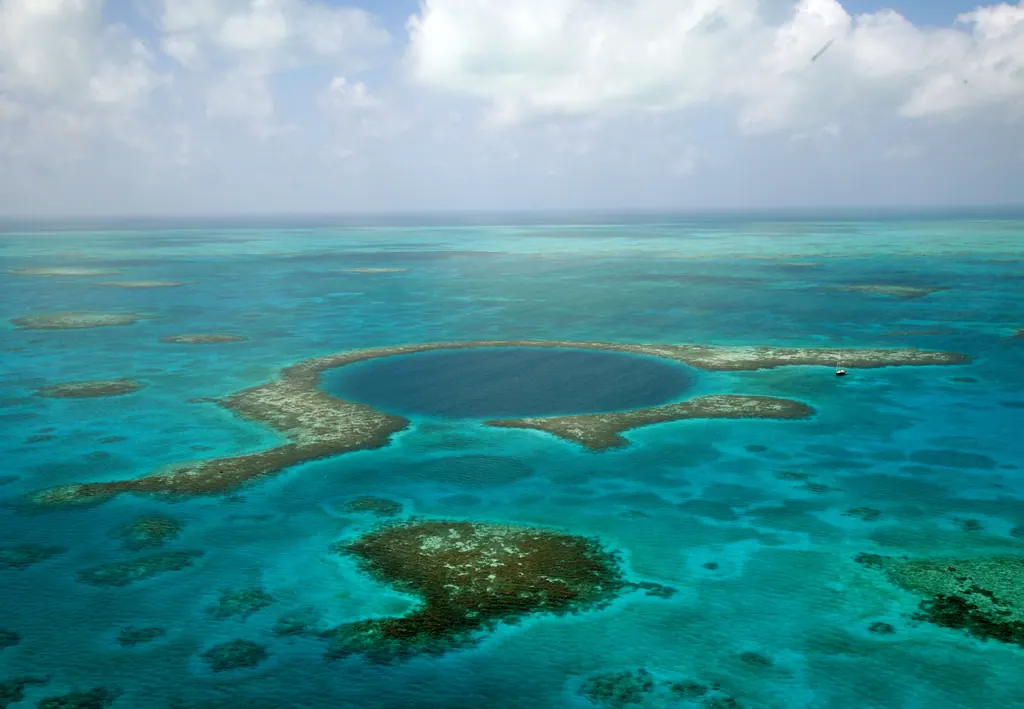
From a small plane over Lighthouse Reef, the Great Blue Hole looks almost too neat to be real: a near-perfect circle of dark navy, about 318 meters (1,043 feet) across, set in a ring of pale turquoise reef. It is the picture most people have in mind when they think of Belize. It is also a good example of how the most famous wildlife sights in this corner of Central America can differ from the experience you actually get in the water.
Between Belize, the Bay Islands of Honduras and Costa Rica, you can snorkel with nurse sharks, look for whale sharks off a backpacker island, listen to howler monkeys at dawn and watch sea turtles come ashore at night. The trips vary a lot in cost, effort and how much you will really see. Below we go through the reefs first, then the rainforests, with fees, seasons and the rules that protect the animals.
What is the Mesoamerican Reef?
The Mesoamerican Barrier Reef runs south from the tip of Mexico's Yucatán Peninsula, along the whole coast of Belize and on to the Bay Islands of Honduras. It is often described as the largest reef system in the Western Hemisphere, and its Belizean section is protected as the Belize Barrier Reef Reserve System, a UNESCO World Heritage Site since 1996. UNESCO describes it as the largest barrier reef in the northern hemisphere, with offshore atolls, hundreds of sand cays, mangroves and lagoons spread over seven protected areas.
The reef has had a rough few decades. UNESCO put the site on its List of World Heritage in Danger in 2009 because of mangrove clearing and plans for offshore oil drilling, and took it off again in 2018 after Belize banned oil exploration in its waters. The IUCN still rated its outlook "significant concern" in 2025, mainly because of coastal development, warming seas and coral disease. Expect healthy patches next to bleached or broken coral; the best reef is usually inside well-run marine reserves.
Is the Great Blue Hole worth it?
The honest answer depends on whether you dive, and how deep.
The Great Blue Hole is a collapsed limestone cave near the center of Lighthouse Reef, an atoll about 70 kilometers (43 miles) off the coast. Jacques Cousteau made it famous in 1971, and it is about 124 meters (407 feet) deep. Its appeal for divers is not fish or coral but geology: around 40 meters (130 feet) down, the wall opens into overhangs hung with huge stalactites that formed when the cave was dry land during the last ice age.
That is also the catch. The standard Blue Hole dive goes down to around 40 meters, so most operators ask for an Advanced Open Water certification or solid experience. Time at depth is short, often just a few minutes before you start the ascent, and the inside of the hole has little marine life. Many divers find the two other dives of the day, often at Half Moon Caye wall and the Aquarium, more rewarding. Most trips stop for lunch on Half Moon Caye, a protected island with a colony of red-footed boobies.
Snorkeling the Blue Hole is possible on the shallow reef rim, which is only around 5 meters (16 feet) deep, but you will not see the deep shape of the hole from the water, and the rim is less colorful than reefs closer to shore.
Flying over the Blue Hole is the way to see the famous shape. Small planes and helicopters run scenic flights from Ambergris Caye and Belize City. The boat trip, by contrast, leaves around dawn and takes about two to three hours each way from San Pedro.
On a boat trip you pay protected area fees on top of the tour price. Visitors have typically paid around BZ$80 (about $40) in cash for the Blue Hole and Half Moon Caye combined; many operators collect this on board, so ask whether it is included. The Belize dollar is pegged at two to one with the US dollar, so prices are easy to convert, and US dollars are accepted almost everywhere.
Hol Chan and Shark Ray Alley: the easiest reef day in Belize
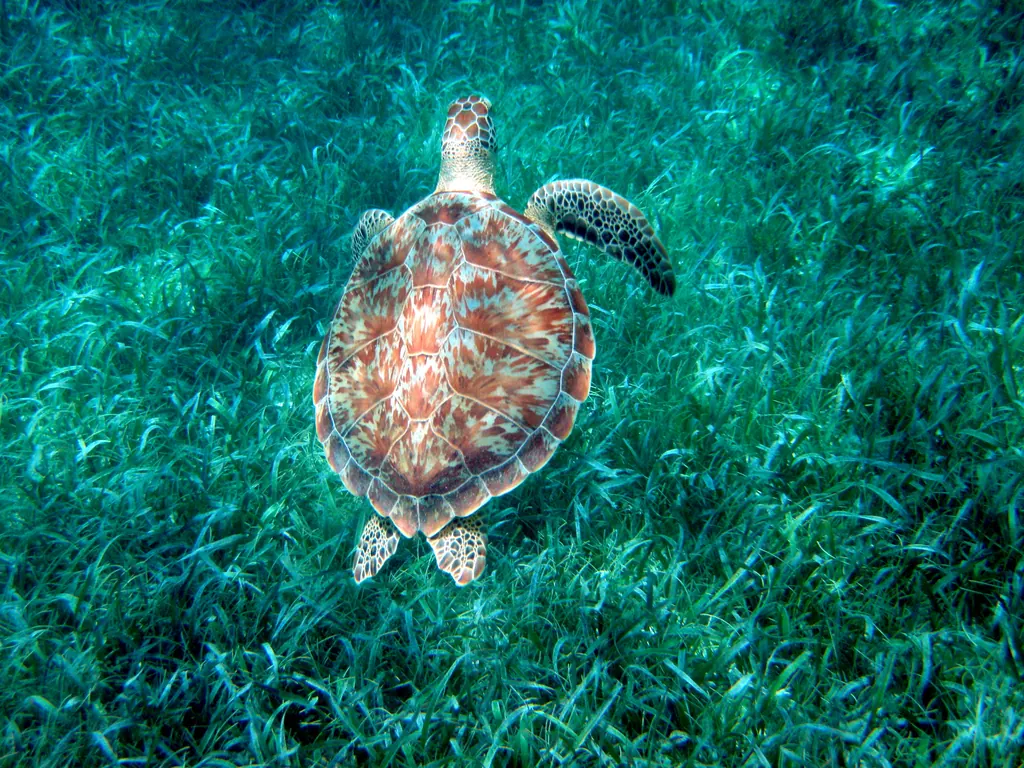
If you only have one reef day in Belize, this is the one most people choose. The Hol Chan Marine Reserve sits just south of San Pedro on Ambergris Caye and is a short boat ride from Caye Caulker. The name means "little channel" in Maya, and the main snorkel site is a natural cut through the barrier reef, where the current brings in grouper, snapper, barracuda, green sea turtles and moray eels.
Shark Ray Alley is part of the same reserve. Fishermen once cleaned their catch here, and nurse sharks and southern stingrays learned to gather around boats. Tour boats still draw them in, and you can float above dozens of nurse sharks in clear water a few meters deep. Nurse sharks are generally docile, but it is still a wild animal site that has been shaped by feeding, and you should not touch or chase the animals.
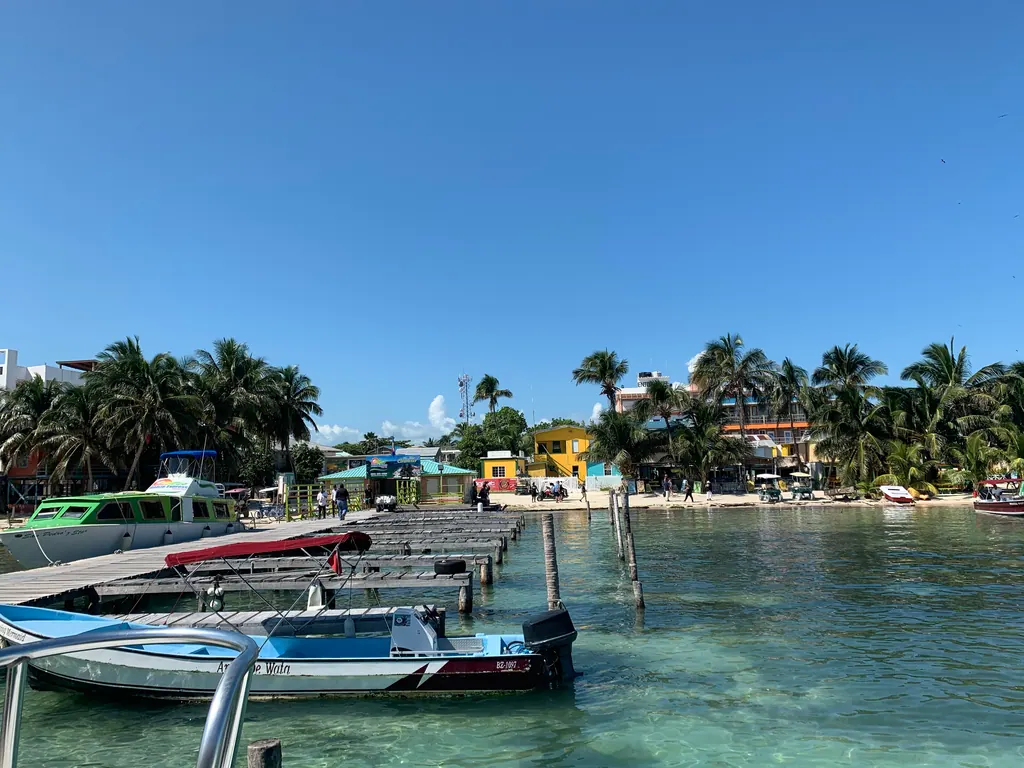
The reserve fee for foreign visitors went up to BZ$30 (about $15) in August 2024, and it is normally included in tour prices. Caye Caulker, with its laid-back "go slow" pace, makes a cheaper base than San Pedro, and both islands have small, narrow beaches rather than long stretches of sand. Belize is a reef destination more than a beach destination, and seagrass along the shore is normal.
Roatán or Utila: which Bay Island suits you?
The reef continues south to the Bay Islands of Honduras. Roatán and Utila have excellent, easy reef diving close to shore, and both sit inside the Bay Islands National Marine Park. They feel very different, though.
Roatán is the larger and more developed island, with an international airport, cruise ship docks and resorts around West Bay. West End is the main dive and snorkel hub, and the Roatán Marine Park, a local nonprofit, runs moorings and patrols around the west end of the island. You can snorkel straight off West Bay beach, and the wall dives start a few minutes from shore. On land, the most interesting native animal is the Roatán agouti, a rabbit-sized rodent found only here, plus spiny-tailed iguanas and plenty of birds. Be wary of attractions that let you hold sloths or monkeys: sloths are not native to the Bay Islands, and animals passed from hand to hand for photos are under stress.
Utila is smaller, cheaper and known as one of the least expensive places in the world to learn to dive. Shops compete hard, and an Open Water course with a few nights of basic accommodation has often cost around 8,000-10,500 lempiras (about $300-400) in recent years, well below typical prices in the US. Most shops quote in dollars, so check what is included: equipment, certification fee, marine park fee and fun dives. Utila is also where people go to look for whale sharks, which feed in the deep water off the north side of the island. They can turn up in any month, and spring (roughly March and April) is often cited as the best time, but sightings are never guaranteed. Good boats follow a code of conduct: only a few snorkelers in the water at once, no scuba near the shark and no touching. On land, the Iguana Research and Breeding Station in Utila town works to protect the Utila spiny-tailed iguana, or "swamper", which lives only in the island's mangroves.
A practical note: the UK Foreign Office warns that petty theft is a problem in the Bay Islands and that emergency medical care there is very limited, although Roatán has a hyperbaric chamber and Utila has recompression facilities. Honduras as a whole has high crime rates on the mainland, so check the safety advice for travelers before you plan a route beyond the islands.
Where can you see wildlife on land in Belize?
You do not need a long expedition to see wild animals in Belize. Three places stand out.
The Community Baboon Sanctuary near Bermudian Landing, about an hour by road from Belize City, is not a zoo. It is a community project started in 1985, where landowners along the Belize River agreed to leave forest corridors for the black howler monkey, known locally as "baboon". A short guided walk from the visitor center usually brings you close to a troop,. The visit is often combined with the Maya site of Altun Ha; see our guide to Mayan ruins in the Yucatán and Belize.
Cockscomb Basin Wildlife Sanctuary in southern Belize was set up in 1986 as the world's first protected area for jaguars. Be realistic: the cats are shy and mostly active at night, and few visitors ever see one. What you do get is well-marked rainforest trails, a waterfall you can swim in, tapir tracks and toucans. The entrance fee has been around BZ$10 (about $5), and the nearest base is the village of Maya Centre or the beach towns of Hopkins and Placencia.
Manatees are easiest to see around Swallow Caye Wildlife Sanctuary, a short boat ride from Belize City and Caye Caulker. Belize has one of the most important populations of Antillean manatees in the Caribbean. Good guides cut the engine and pole the boat in quietly; avoid any operator who lets people swim with or feed the animals.
Costa Rica's national parks: which one for which animal?
Costa Rica's parks are run by the national park service SINAC. Most of the big ones sell tickets online in advance, many have daily visitor caps, and SINAC prices tickets for foreign visitors in US dollars, with adult entry to most parks around $15-18 in 2026. Book through the official SINAC site, not look-alike resellers.
| Park | Best for | Good to know |
|---|---|---|
| Tortuguero | Nesting sea turtles, canals with caimans and monkeys | Reached by boat or small plane; green turtles nest mainly July-October |
| Corcovado | Tapirs, all four Costa Rican monkey species, scarlet macaws | A licensed guide is mandatory; remote and expensive to reach |
| Manuel Antonio | Sloths, capuchins, beaches inside the park | Around $18 in 2026, online tickets only, closed Tuesdays |
| Monteverde | Cloud forest, resplendent quetzal, hummingbirds | Private reserve, entry around $25; cool and often misty |
Tortuguero on the Caribbean coast is the most important nesting beach for green turtles in the western Caribbean. The peak is usually August, and leatherbacks nest earlier in the year, roughly March to May. Night turtle walks are run by licensed local guides in small, controlled groups, and cameras and flashlights are not allowed on the beach after dark, because light disturbs nesting females and confuses hatchlings.
Corcovado on the Osa Peninsula has some of the richest rainforest left in Central America. Since 2014, all visitors must go with a licensed guide, which keeps numbers down and makes a visit more expensive. Trips leave from Drake Bay and Puerto Jiménez.
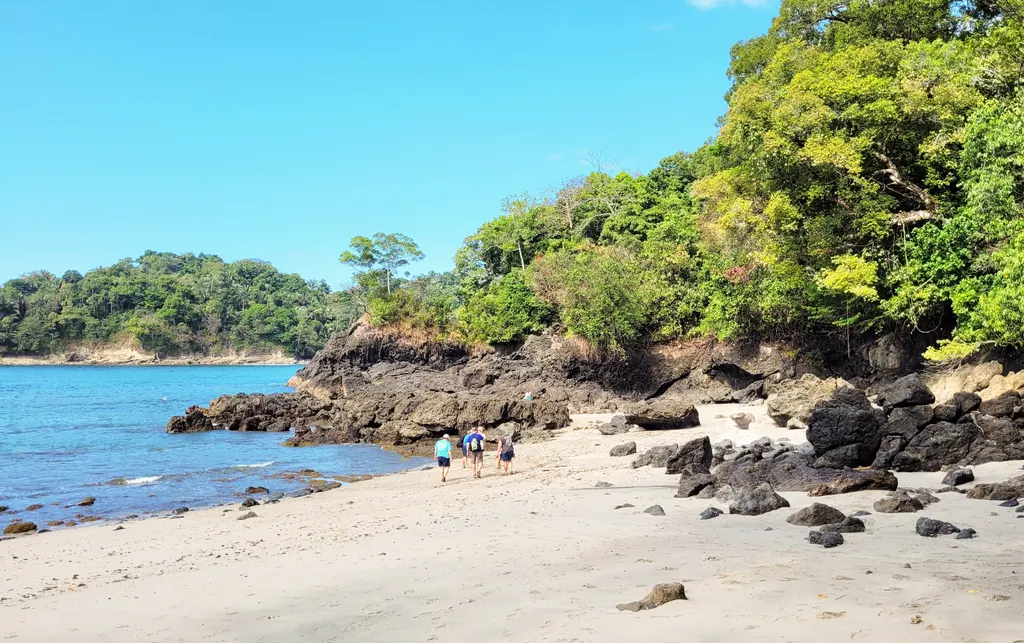
Manuel Antonio is the opposite: small, easy to reach from the town of Quepos, and busy. It is one of the most reliable places in the country to see sloths and white-faced capuchins. Arrive at opening time and consider a guide with a spotting scope.
Monteverde is not a national park but a private reserve, high on the continental divide. The draw is the cloud forest itself, dripping with mosses and orchids, and the chance of seeing a resplendent quetzal, most likely in spring.
How do you watch wildlife responsibly?
A good guide makes all the difference, and a few rules apply everywhere:
- Never touch or feed wildlife, including fish, stingrays, sharks, monkeys and raccoons. Feeding changes behavior and spreads disease; in Costa Rica's parks it is also against the rules.
- Do not stand on or touch coral. Practice your buoyancy, and if you are a new snorkeler, wear a vest so you can float without kicking the reef.
- Wear a rash guard and use reef-safe mineral sunscreen.
- Skip animal photo ops. Holding sloths, monkeys or baby turtles is never part of a responsible tour.
- Keep your distance from turtles and whale sharks, and never use flash on a nesting beach.
- Choose operators who respect the reserve rules, limit group sizes and pay their park fees. Cheap trips often cut exactly those corners.
When should you go?
The dry season from roughly December to April is the most comfortable time in all three countries, with calmer seas for the Blue Hole crossing and easier trails. It is also the busiest and most expensive. The Atlantic hurricane season runs from June to November, with the highest risk from August to October, which is also when Tortuguero's green turtles are at their peak.
If you want to combine them, a practical route is a week on Ambergris Caye or Caye Caulker with a day on land at the Baboon Sanctuary, then a flight to Roatán or a ferry to Utila from the mainland port of La Ceiba. Costa Rica works best as a separate trip, with two or three parks rather than all four. For more ideas, browse our nature stories and the guides to Belize and Costa Rica.
Frequently asked questions
Can you snorkel in the Great Blue Hole?
Yes, on the shallow reef rim, which is only around 5 meters deep. You will not see the hole's shape or the deep stalactites from the surface, so many snorkelers enjoy the other stops on the day trip, such as Half Moon Caye, more.
Do you need to be an advanced diver to dive the Great Blue Hole?
Most operators ask for an Advanced Open Water certification or similar experience, because the standard dive goes to around 40 meters (130 feet) to see the stalactites. Time at that depth is only a few minutes.
Is Roatán or Utila better for learning to dive?
Utila is usually cheaper and has a strong dive school scene, with courses often including basic accommodation. Roatán costs more but has more hotels, restaurants and easy beach snorkeling at West Bay.
When can you see whale sharks off Utila?
Whale sharks can appear off Utila in any month, and spring, roughly March and April, is often cited as the best time. Sightings are never guaranteed, so treat one as a bonus rather than the reason for the trip.
Can you see jaguars in Belize?
Jaguars live in Cockscomb Basin Wildlife Sanctuary and other forests in Belize, but they are shy and mostly active at night, so very few visitors see one. Howler monkeys, toucans and manatees are far more reliable sightings.
- UNESCO World Heritage Centre: Belize Barrier Reef Reserve System
- UNESCO: Belize Barrier Reef removed from the List of World Heritage in Danger (2018)
- IUCN World Heritage Outlook: Belize Barrier Reef Reserve System
- San Pedro Sun: New park fee goes into effect at Hol Chan Marine Reserve (2024)
- GOV.UK foreign travel advice: Honduras, safety and security
- Costa Rica Tourism Board (ICT): Manuel Antonio opening days
- SINAC: Costa Rica national park reservations