Until 1958, Christmas Day was an ordinary working day in Scotland. For almost four centuries after the Reformation, the Church of Scotland frowned on Christmas as a Catholic feast, and the gifts, food and late nights that the rest of Europe saved for December 25 drifted a week later, to the last night of the year. That night has a name of its own, and Scots still treat it as the main event of winter.
If you are spending the holidays in Scotland, or you have a Scottish friend who insists on being the first through your door on January 1, here is what Hogmanay is, where its customs come from and where to see it at its most spectacular.
Where Does the Word Come From?
Hogmanay simply means New Year's Eve, December 31, and it is pronounced hog-muh-NAY. Nobody knows for certain where the word comes from. The most common theory links it to an old French word for a New Year's gift, carried to Scotland during the centuries of the Auld Alliance between the two countries, while others point to Norse or Gaelic roots.
The celebration itself is older than the name. VisitScotland traces it to winter solstice festivals and Viking midwinter feasts, when the shortest days of the year were met with fire, food and drink. That is why so many Hogmanay customs still involve flames.
Why Is Hogmanay Bigger Than Christmas in Scotland?
After the Scottish Reformation of 1560, the Kirk, as the Church of Scotland is known, discouraged Christmas, and a 1640 act of the Scottish Parliament abolished the "Yule vacation" altogether. The act was repealed in 1686, but Christmas stayed low key for generations. According to the National Trust for Scotland, December 25 only became a public holiday in Scotland in 1958, and Boxing Day and New Year's Day followed in 1974.
New Year filled the gap. Families gathered, debts were paid, houses were cleaned and visits were made on the first day of the year. Christmas is now celebrated in Scotland much as it is in the U.S., but Hogmanay never lost its place. Scotland even has an extra public holiday on January 2, which tells you how long the celebrations were expected to last.
What Is First Footing?
First footing is the custom Scots talk about most. The "first foot" is the first person to cross the threshold of a home after midnight, and that visitor is said to set the household's luck for the coming year.
Tradition is specific about who should do it: a tall, dark-haired man. A fair-haired stranger was considered bad luck, a superstition that VisitScotland says goes back to the days when a blond visitor at the door was likely to be a Viking raider. The first foot should never arrive empty handed. Classic gifts are:
- Coal, for a warm house all year
- Salt, for wealth
- Black bun, a dense fruitcake baked in pastry, so the household never goes hungry
- Shortbread or a bottle of whisky, which these days usually replace the coal
The host is expected to return the favor with a dram, a bite to eat and a toast. In a small town, first footing can turn into a door to door tour of the neighborhood that lasts until dawn.
What Else Happens on Hogmanay?
Before midnight comes the redding, a thorough cleaning of the house. In the days of open fires, the ashes were cleared so that the new year could start with a fresh fire, and the idea extended to settling debts. Nobody wanted to carry anything old into January.
At midnight, the bells ring and the whole room sings Auld Lang Syne. Robert Burns wrote the words in 1788, setting them to an old Scottish tune, and the song has since spread across the English speaking world. Scots wait until the final verse to cross their arms and join hands with the people on either side. If you cross them at the start, someone will gently correct you.
Then there is fire. Across Scotland, towns and villages see in the year with torches, bonfires and blazing barrels, a link to the midwinter festivals of the distant past.
Where Are the Best Hogmanay Celebrations?
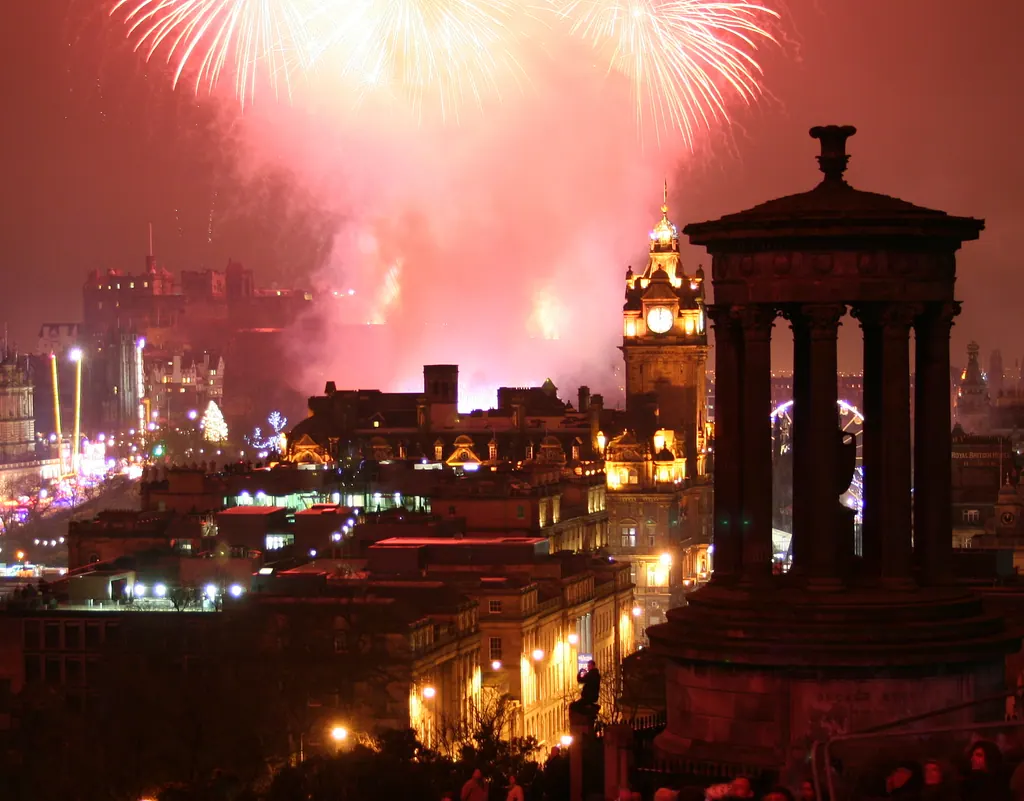
Edinburgh throws the biggest party. Edinburgh's Hogmanay 2026/27 runs over four days. It opens with the Torchlight Procession on December 29, 2026, when thousands of torch bearers walk from the Meadows through the Old Town to finish beneath the castle, led by pipes and drums and a squad of Shetland Vikings. Torch tickets started at about £22 (about $29 in 2026). The Street Party on December 31 fills Princes Street with stages, ceilidh dancing and fireworks over the castle at midnight, with tickets from about £33 (about $44 in 2026) and a minimum age of 12. The organizers warn that the only valid tickets are sold through their own site, Ticketmaster and Tickets Scotland.
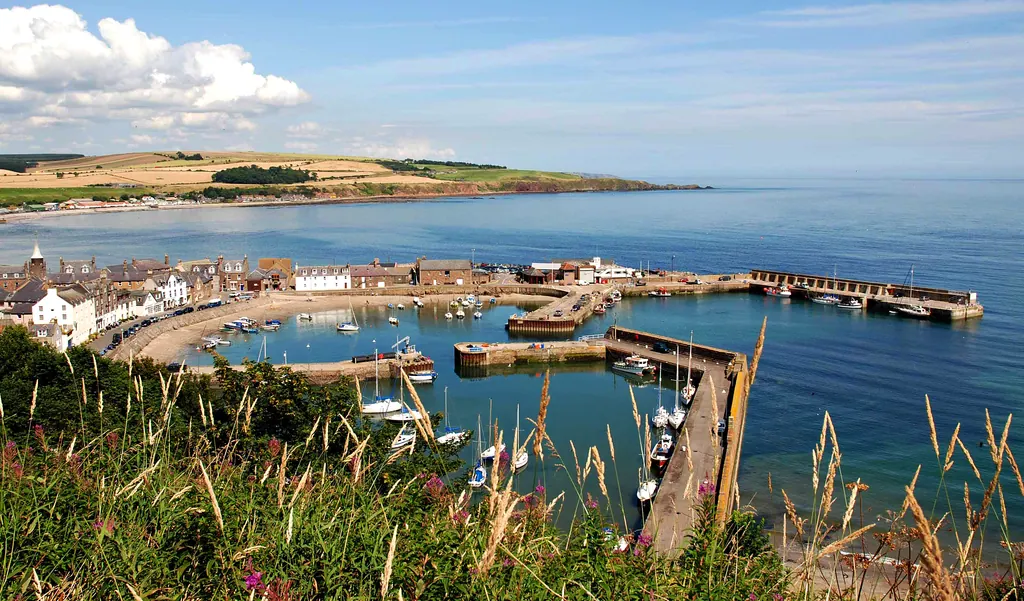
Stonehaven, a harbor town south of Aberdeen, has the most dramatic ritual. As the bells ring at midnight, about 40 men and women light fireballs of wire and fuel at the top of the harbor slipway and swing them around their heads up and down the High Street for about 20 minutes, before fireworks go up over the bay. It is free to watch, but the organizers recommend arriving from 10 p.m., and the gates close at 11:40 p.m. or earlier when the street is full.
Comrie, a village in Perthshire, lights its flambeaux at midnight: tall birch poles wrapped in rags and tar that are carried around the village behind a pipe band and then thrown off the Dalginross Bridge into the River Earn.
Burghead, on the Moray coast, keeps the "old" new year. When Britain moved to the Gregorian calendar in 1752 and skipped 11 days, some communities stuck to the old date. On January 11, 2027, a burning barrel of tar called the Clavie will again be carried through the village and set on the Doorie Hill.
Can Visitors Join In?
Yes, and Scots are generally delighted when they do. The big events are built for visitors, but a few practical points help:
- Book early. Hotels in Edinburgh fill up and prices peak around December 31. Staying a short train ride away, in Glasgow or Stirling, is a common workaround.
- Plan for January 1 and 2. Both are public holidays in Scotland, so some shops, restaurants and attractions close or open late. Check before you count on a museum day.
- Dress for the weather. Scotland at midnight in late December is often cold, wet and windy. Waterproof layers matter more than style.
- Know the time difference. Midnight in Scotland is 7 p.m. on the East Coast and 4 p.m. on the West Coast, so the people at home will still be getting ready when you are singing Auld Lang Syne.
- Bring something if you go first footing. If a Scottish host invites you round after the bells, a bottle of whisky or a tin of shortbread is the right gift, and arriving just after midnight is perfectly normal.
If your winter travel is built around festivals, our pick of winter festivals worth traveling for has more ideas, and our culture guides cover traditions from Mexico's Las Posadas to the Polish Wigilia.
Bringing a Little Hogmanay Home
You do not need to be in Scotland to borrow the best parts. Tidy the house on December 31, pour a dram at midnight, learn the words to more than the first verse of Auld Lang Syne and, if you know a tall, dark-haired friend, ask him to be the first through the door on January 1 with a lump of coal and a smile. Scots would say it can only help.
Frequently asked questions
What does Hogmanay mean?
Hogmanay is the Scots word for New Year's Eve, December 31, and the celebrations that go with it. The origin of the word is uncertain, but a link to an old French word for a New Year's gift is the most common theory.
Why is Hogmanay so important in Scotland?
Christmas was discouraged in Scotland for centuries after the Reformation and only became a public holiday in 1958, so New Year became the main winter celebration.
What do you bring when first footing?
Traditionally coal, salt and black bun. Today shortbread or a bottle of whisky is the usual gift.
When is Edinburgh's Hogmanay 2026?
Edinburgh's Hogmanay 2026/27 runs from the Torchlight Procession on December 29, 2026, to January 1, 2027, with the Street Party on December 31.