Cape Verde sits in the Atlantic about 350 miles off the coast of Senegal, and its ten islands sit right in the trade wind belt. That position gives the country one of the most stable climates in the Atlantic: warm all year, very little rain and steady wind for much of the year. So the real question is not when it is warm, but what you want to do when you get there. Beach days, kitesurfing, turtle watching and mountain hiking all have their own best months.
What is the weather like in Cape Verde?
The islands have two seasons. The dry season runs from about November to July, and the short rainy season runs from about August to October. Even the rainy season is mild by tropical standards. Rain usually comes as short, heavy showers rather than days of gray skies, and many weeks pass without any at all.
Where you stay matters as much as when you go. The flat, sandy islands of Sal, Boa Vista and Maio are close to desert and see very little rain in any month. The mountainous islands of Santiago, Fogo, Santo Antão and São Nicolau catch more of the moisture, which is why their valleys turn green in late summer and fall.
Typical temperatures stay in a narrow band:
- December to April: daytime highs around 77°F (25°C), cooler evenings and the strongest winds.
- May to July: highs around 79°F to 82°F (26°C to 28°C), calmer winds and almost no rain.
- August to October: the warmest and most humid months, with highs around 86°F (30°C) and occasional showers.
The sea follows the same rhythm. It is at its coolest, around 72°F (22°C), in February and March and at its warmest, around 81°F (27°C), in September and October.
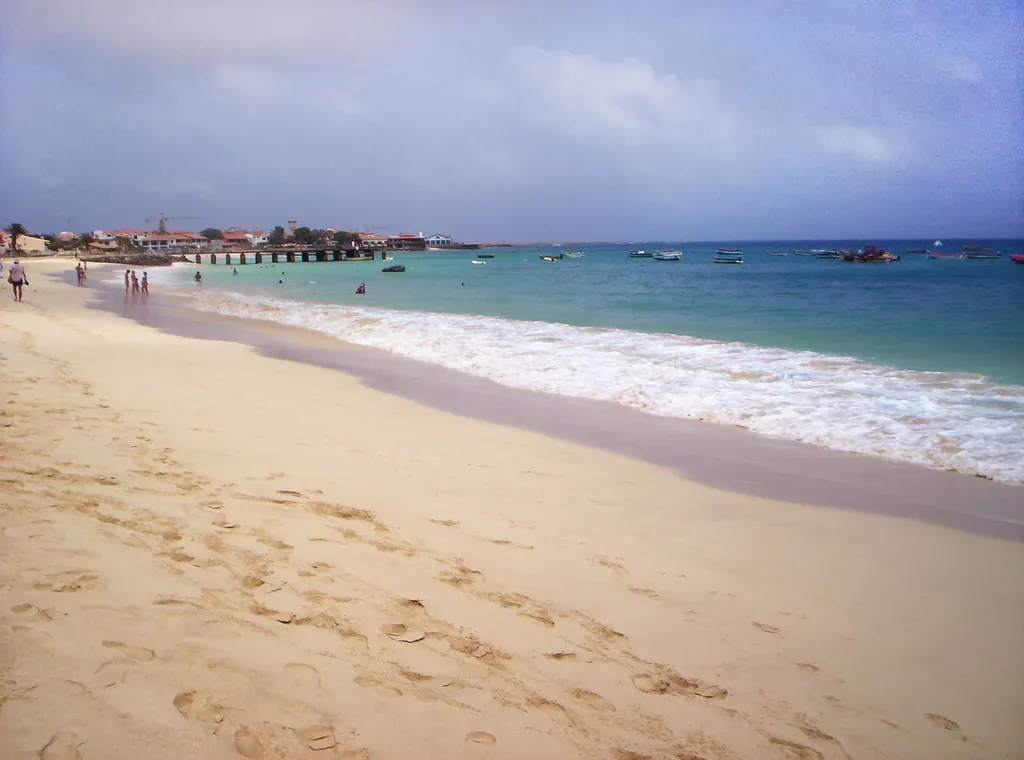
When is the best time for a beach holiday?
For most people who want sun, warm water and few interruptions, May to July and November are the sweet spots. The water is pleasant, the wind is lighter than in midwinter and rain is rare. October can also be very good on Sal and Boa Vista, with the warmest sea of the year, as long as you accept a small chance of a shower or a muggy day.
Winter, from December to March, is the busiest period for visitors from Europe, since it is the warmest place within a reasonable flight. It is still sunny, but the wind can make the beach feel cool in the shade, and the water is at its coolest. Note that Sal's Santa Maria beach is sheltered on the south side of the island, which helps on windy days.
What is the dust haze, and when does it happen?
Between about December and February, the dry Harmattan wind sometimes carries fine dust from the Sahara out over the islands. Locals call the haze bruma seca. On those days the sky turns pale, views of the other islands disappear and the sun feels softer. It rarely ruins a holiday, but it can delay flights to the smaller islands and is worth knowing about if you have asthma or plan to photograph Fogo's volcano.
When is the best time for kitesurfing and surfing?
Wind is Cape Verde's biggest draw for watersports. The trade winds blow steadily from about November to May, and they are usually strongest from January to April. Kite Beach on the east side of Sal and the beaches around Sal Rei on Boa Vista are the best known spots.
Surfers look at swell rather than wind. North Atlantic swells reach the islands from about October to March, and Ponta Preta on Sal is the best known wave. From June to September the wind drops and the sea is often calm, which is better for swimming, snorkeling and paddleboarding.
When can you see sea turtles in Cape Verde?
Cape Verde is one of the most important nesting places in the world for loggerhead turtles. The females come ashore at night to lay eggs from about June to October, with the peak in August and September, mainly on Boa Vista, Sal and Maio. Hatchlings then emerge from about August to December.
Turtle watching is only allowed on guided night walks with licensed local conservation groups, which keep groups small and use red light. Do not walk on nesting beaches with a flashlight after dark, and never touch a turtle or a nest. Booking a few days ahead is wise in August, when the walks fill up.
When is the best time for hiking?
The mountain islands are best from about October to May. After the rains, the valleys of Santo Antão are at their greenest, and the air is clear enough for the long views that make the island famous. Fogo, where you can climb the active volcano Pico do Fogo, is best on dry, clear days in winter and spring. Summer hiking is possible, but the heat makes the long descents hard work.
Do you need a visa, and what is the airport fee?
As of October 31, 2026, U.S. citizens do not need a visa for stays of 30 days or less. All visitors must still complete a free pre-registration on the government's EASE portal before arrival, ideally at least five days ahead, and pay the airport security fee (TSA) of 3,400 escudos, about €31 or roughly $36 in 2026. Children under 2 are exempt. Since July 1, 2026, travelers who arrive without pre-registering pay double the fee at the border. Your passport should be valid for at least six months.
The State Department lists Cabo Verde at Level 1, exercise normal precautions, as of October 31, 2026, with a note about petty crime in the capital, Praia. Keep an eye on bags and phones in busy areas, as you would in most cities. If you are unsure about service charges, see who expects a tip in Africa, Asia and the Middle East.
Which month should you choose?
Here is the short version, month by month:
| Months | Best for | Keep in mind |
|---|---|---|
| November | Beach, hiking, start of kite season | Busy around the holidays |
| December to February | Kitesurfing, winter sun | Coolest sea, possible dust haze |
| March and April | Kitesurfing, surfing, hiking | Strong wind on Sal and Boa Vista |
| May to July | Beach, swimming, calm sea | Few downsides, dry everywhere |
| August and September | Turtles, warmest sea | Heat, humidity, some showers |
| October | Warm sea, hatchlings, green valleys | Last month of the rainy season |
If you want one answer, November or May is hard to beat: warm sea, dry weather, manageable wind and fewer visitors than in winter. Families who want a summer trip can choose June or July, and wildlife fans should aim for August or September. Explore more places in Africa or compare with other beach holidays on Travel80.
Frequently asked questions
What is the rainy season in Cape Verde?
The rainy season runs from about August to October. Rain usually comes as short showers, and the flat islands of Sal, Boa Vista and Maio stay mostly dry.
When is the sea warmest in Cape Verde?
The sea is warmest in September and October, at around 81°F (27°C), and coolest in February and March, at around 72°F (22°C).
When is the best time for kitesurfing in Cape Verde?
The trade winds blow from about November to May and are usually strongest from January to April, especially on Sal and Boa Vista.
When can you see turtles in Cape Verde?
Loggerhead turtles nest from about June to October, with a peak in August and September. Hatchlings emerge from about August to December. Watching is only allowed on guided night walks.
Do Americans need a visa for Cape Verde?
As of October 31, 2026, U.S. citizens do not need a visa for stays of 30 days or less, but must preregister on the EASE portal and pay the airport security fee of 3,400 escudos.