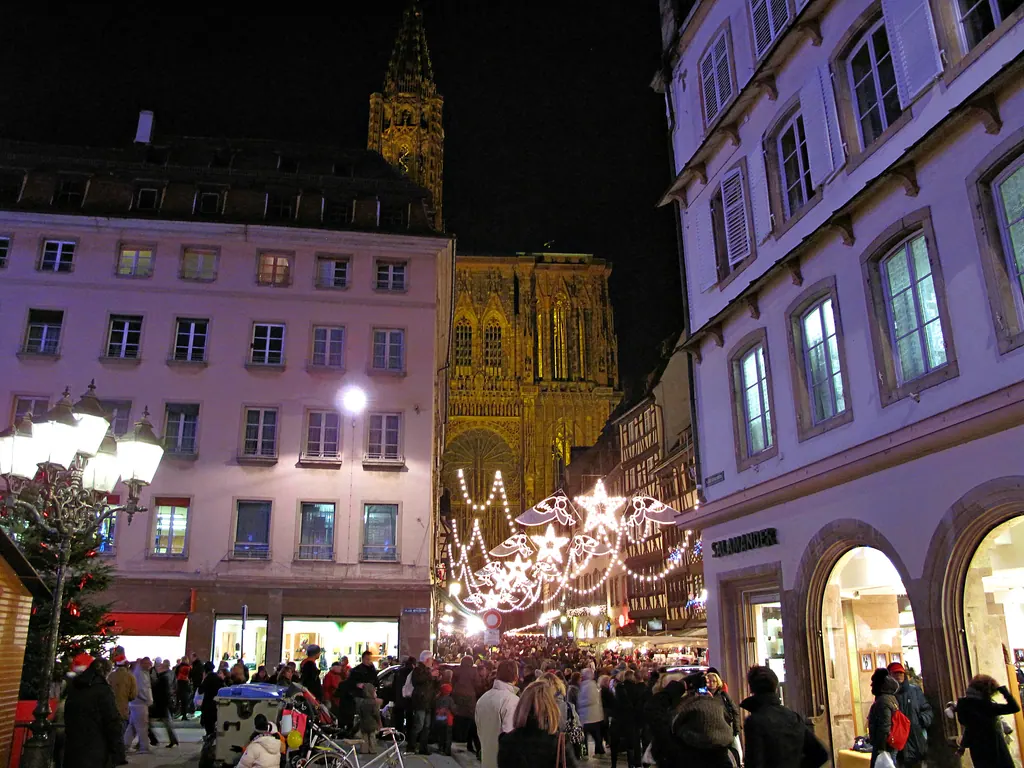
In 1570, Strasbourg's Protestant reformers had a problem with Saint Nicholas. The old December market in front of the cathedral was named after him, and a saint did not fit the new faith. So the city renamed it after the Christ child, the Christkindel, and moved the gift-giving to Christmas Eve. The market has been running in one form or another ever since, which makes it one of the oldest Christmas markets in Europe.
Today the whole medieval center of the city turns into a winter fair for four weeks. It is also busy, cold and easy to get wrong if you arrive at the wrong hour or expect to drive in. Here is how the 2026 market works, where to go, what to eat, and what else is worth your time in Strasbourg in December.
When Is the Strasbourg Christmas Market in 2026?
According to the city and the Strasbourg tourist office, the 2026 market runs from Friday, November 27 to Thursday, December 24, 2026.
| Date | Opening hours |
|---|---|
| November 27 (opening day) | 2 p.m. to 9 p.m. |
| November 28 to December 23 | 11:30 a.m. to 9 p.m. daily |
| December 11, 12, 18 and 19 | Late opening until 10 p.m. |
| December 24 | 11:30 a.m. to 6 p.m. |
Two things surprise many American visitors. First, the stalls close for good on the evening of December 24, and none are open on Christmas Day or between Christmas and New Year's. Second, the lights stay up longer than the market: the street illuminations go on from November 20, and the lights and the Great Christmas Tree on Place Kléber keep shining until January 3, 2027. If you are coming between Christmas and New Year's, you get the decorations without the chalets.
Where Are the Markets?
Strasbourg does not have one Christmas market but several. In 2026 there are eight, spread across the Grande Île, the island in the Ill River that forms the historic center and has been a UNESCO World Heritage site since 1988. They are close enough to walk between in a few minutes.
- Place Broglie is the historic heart of the Christkindelsmärik, where the market has stood since 1871. In 2026 you enter through a new decorated archway, and the facade of the city hall has been turned into a giant Alsatian house with a nightly light show.
- Place de la Cathédrale and Place du Château wrap the stalls around the Gothic cathedral, which is the most photographed corner of the market.
- Place Kléber is home to the Great Christmas Tree, the city's centerpiece, and is busy at all hours.
- Smaller squares across the old town have their own markets and character, from local producers to regional crafts. The official map is published on the city's Christmas website.
What to Eat and Drink
The food is a large part of the appeal, and much of it is specific to Alsace, a region that has passed between France and Germany several times and cooks like both.
- Vin chaud. Mulled wine, often made with Alsatian white wine as well as red. Drinks are typically served in a reusable cup with a deposit; keep it as a souvenir or return it for your money back.
- Bredele. Small Alsatian Christmas cookies, sold by the bag in dozens of shapes and flavors.
- Pain d'épices. Spiced honey bread, a holiday staple in the region.
- Mannele. A brioche shaped like a little man, traditionally eaten around Saint Nicholas Day on December 6.
- Tarte flambée (flammekueche). A thin, crisp flatbread topped with crème fraîche, onions and bacon. It is warm, cheap and easy to eat standing up.
- Bretzels. Alsatian pretzels, sometimes with cheese or bacon baked in.
If you have been to the German markets across the Rhine, you will notice the overlap. Our guide to German Christmas market food covers the specialties you will find on both sides of the border.
Beyond the Stalls: Strasbourg in December
The market is the reason most people come, but the city deserves more than a few hours of browsing.
The cathedral. Strasbourg's sandstone cathedral was the tallest building in the world from 1647 to 1874, and its spire still dominates every view of the old town. One important note for 2026: the cathedral's website states that the famous astronomical clock show, with its parade of apostles at 12:30 p.m., does not take place during the Christmas market. You can still see the clock itself inside the cathedral.
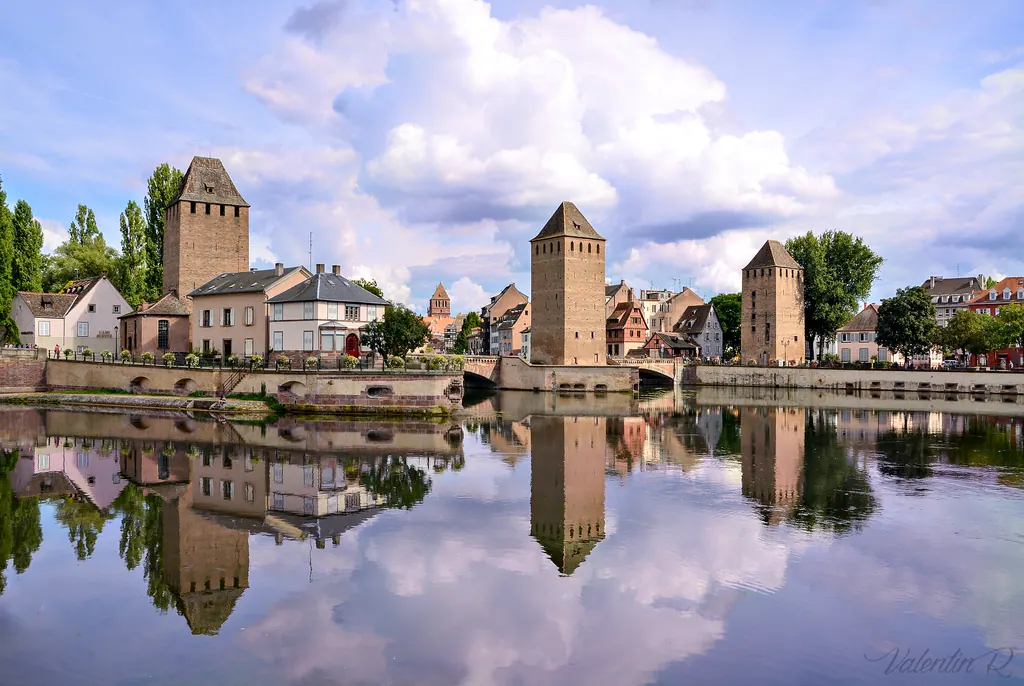
La Petite France. The old tanners' and millers' quarter is all half-timbered houses, canals and covered bridges. It is quieter than the market squares, especially in the morning, and lovely when the lights come on.
Germany by tram. Tram line D runs across the Rhine to Kehl in Germany, a short and easy trip that makes for a fun detour.
Colmar and the wine villages. Colmar, about half an hour south by regional train, has its own Christmas markets and a very pretty old town. Smaller wine villages along the Alsace Wine Route, such as Riquewihr and Kaysersberg, also decorate heavily in December, though they are easiest to reach by car or on a tour.
How to Get There From the U.S.
There are no nonstop flights from the U.S. to Strasbourg's small airport. Most American travelers fly to Paris and take the high-speed TGV from Paris Gare de l'Est, which takes under two hours. Some TGVs also run directly from Paris Charles de Gaulle Airport. Frankfurt Airport in Germany is another option, with train and bus connections.
The tourist office strongly recommends arriving by train. Parking rules for 2026 had not been published when we checked on November 29, 2026, and traffic in the Grande Île is heavily restricted during the market. If you drive, use the Park & Ride lots outside the center and take the tram in. In recent years the city has also set up security checks at the entrances to the island, so allow a little extra time and travel light.
Tips for Visiting
- Go early or on a weekday. The official advice is to visit in the morning from 11:30 a.m. or on weekdays for a calmer experience. Weekend evenings in December can be very crowded.
- Book accommodation early. The tourist office recommends reserving months in advance. If the center is full, stay in another district or a nearby town on the tram network.
- Dress for the cold. Expect daytime highs around 41°F (5°C) and frosty nights. Comfortable, warm shoes matter more than anything else, since you will be standing and walking for hours.
- Bring a card and some cash. Many stalls accept cards, but a few euros in cash is handy for small purchases and cup deposits. Our guide to paying in local currency or dollars abroad explains which option to pick at the card terminal.
Is It Worth the Trip?
If you are choosing one Christmas market in Europe, Strasbourg makes a strong case: centuries of history, a whole old town given over to the season, and food you will not find at home. Pair it with a day in Colmar and a night in La Petite France and you have a full winter city break. If you want to compare it with other holiday markets, read our guide to the Baltic Christmas markets in Tallinn, Riga and Vilnius, or see more trips in France.
Frequently asked questions
When does the Strasbourg Christmas market open in 2026?
The 2026 market runs from November 27 to December 24, 2026. It opens at 2 p.m. on the first day and is otherwise open daily from 11:30 a.m. to 9 p.m.
Is the Strasbourg Christmas market open after Christmas?
No. All stalls close on the evening of December 24. The lights and the Great Christmas Tree stay up until January 3, 2027.
Can you see the astronomical clock show during the Christmas market?
According to the cathedral's website, the 12:30 p.m. clock show does not take place during the Christmas market, though the clock can still be seen.
How do you get to Strasbourg from Paris?
The high-speed TGV from Paris Gare de l'Est takes under two hours, and some trains also run directly from Charles de Gaulle Airport.